
Judgement Cannot Be Delegated · Presentation
It is often said that schools are late to artificial intelligence. The claim is debatable, but it hides something more precise and more uncomfortable: much of the educational debate rests on a mistaken idea of what lies inside the machine. And clearly, you cannot decide well about what you do not know.
This series follows that path in twelve articles grouped into four blocks, where the order matters to ensure deep understanding. You cannot analyse what you do not understand. You cannot teach without knowing how the tool affects the learner. You cannot build literacy without a map and without trained teaching staff. And you cannot lead a school without assessing, governing and deciding on the basis of evidence.
The first three articles explain how a language model works, without myths and without catastrophism: why it predicts instead of understanding, why it invents with the same assurance with which it gets things right, and where its biases really come from. The next three deal with the learning mind: what does the evidence show when effort is delegated, which difficulty is worth protecting, and how is doubt trained?
From the seventh onwards, the question becomes a curricular one: what needs to be taught, with what critical depth and with what prior training of the teaching staff. And the last three deal with what ends up on the leadership team’s desk: assessing what the machine writes, governing in line with European regulation and setting the school’s course with data rather than headlines.
Each post draws on cross-checked sources and respects their caveats.
Professional judgement cannot be delegated. Let us begin by understanding the machine.

Block I: Inside the Machine
What is generative artificial intelligence, really?
1. The Most Probable Echo.
Prediction, not comprehension: what happens inside a language model
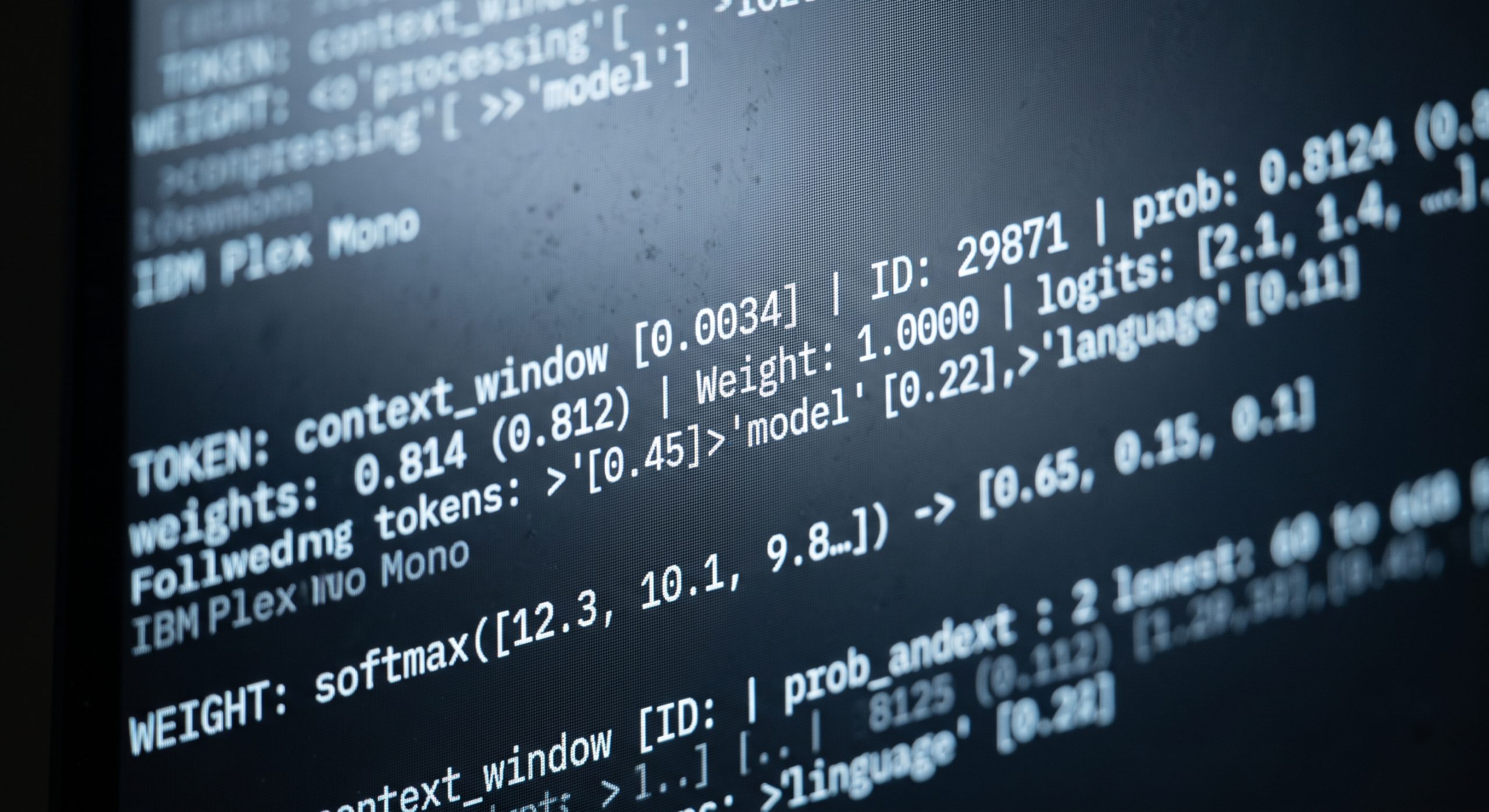
A language model does not consult any knowledge base. It bets on the next word, writes it and bets again, taking the previous bet as sound. What training builds is not knowledge of the world, but a map of proximities between the things people have said about it.
2. No Warning Light.
Hallucination is not a system fault; it is how the system works
When the machine invents a reference and gives it a credible digital identifier, it is not malfunctioning. There is no internal signal that distinguishes the plausible from the true, and the very mechanism that fabricates false citations is the one that makes the tool useful at all.
3. The World That Fitted in the Data.
Algorithmic bias does not begin in the algorithm
Someone selected what went in, someone decided which things counted as the same thing and someone decided what carried more weight. Nobody programmed a prejudice, but the result discriminates all the same. With a consequence that can be seen in the classroom: two students with the same tool open may not be in the same situation.
A language model does not look up information in a database; it operates on probability.
Block II: The Mind That Delegates
What happens to someone who is learning when they delegate the effort?
4. The Debt You Cannot See.
Does studying with AI harm the brain? What we know about cognitive debt
Eighteen people wrote an essay with ChatGPT and, once they had finished, none of them could quote from memory a single sentence of the text they had just handed in. The evidence on what artificial intelligence does to learners, with the small print of each study, is far more nuanced than any headline.
5. The Empty Gym.
Desirable difficulties: the effort we should not spare
The conditions that make studying easier and more fluent tend to produce poorer long-term learning. But not every difficulty teaches, and confusing them does harm. The useful question is not whether to use AI, but exactly which effort needs to be protected in each task.
6. Nobody Doubts What They Do Not Know.
From critical thinking to lateral reading: doubting is a procedure
Forty-five experts evaluated websites on controversial issues. The professional fact-checkers beat the historians by reading less: they left the page within half a minute and found out from outside who was behind it. Doubting well is not an attitude; it is a repertoire of moves that can be taught.

Delegating cognitive effort to artificial intelligence saves immediate time at the expense of stunting deep learning.
Block III: Literacy for the Whole School
What needs to be taught, and who should teach it?
7. The Map of an Already Inhabited Territory
The AILit framework: AI literacy now has an official map
Europe now has an official guide to what pupils should learn about artificial intelligence at school. Research, meanwhile, suggests that what is essential is considerably less than it seems, and that it does not match what is taught today. Between the two there is a gap, and a school has to decide what to do with it.
8. Digital Plastic
Synthetic content and model collapse: why literacy must be critical
Cheap, ubiquitous, malleable, useful and persistent. Also cumulative: what the machine produces goes back into the web, and the next machine feeds on the web. Hence literacy alone is not enough, and deciding when not to use the tool is part of the competence rather than a renunciation of it.
9. What No One Can Learn on Their Own
Teachers’ ethical literacy: what training really works
Teachers ask for training to talk about the risks more insistently than for anything else, and this is precisely where experts agree least. Seven elements make up that syllabus, none of them an app. And one finding: guidelines for use are not handed out; they are built.
AI literacy in schools is not about teaching applications, but about equipping teachers and students with critical judgment.
Block IV: Leading the Change
What decisions cannot be delegated?
10. What the Machine Cannot Hand In for You
Detectors do not work: assessing with an AI use scale
A student accused of using artificial intelligence ran an article by her lecturer, published before ChatGPT existed, through the same detectors. It came out as one hundred per cent generated. If detection cannot uphold academic integrity, the alternative is not technological: it begins with stating in advance what use is permitted in each task.
11. The Rules in Force
The EU AI Act: what is already binding and what has been postponed
What has been most discussed in education was postponed until the end of 2027. What most directly affects a school was not postponed and has been in force since February 2025. What the regulation requires today, what to ask a supplier before signing and how to write a policy that can actually be complied with.
12. The Pilot and the Passenger
Cognitive sovereignty: protect, delegate, shape
Students and teachers agree almost exactly where the prevailing narrative sets them against each other. With that evidence, the close of the series separates what we know from what we assume about the school of the future and proposes three verbs for making decisions in a school: protect, delegate and shape.

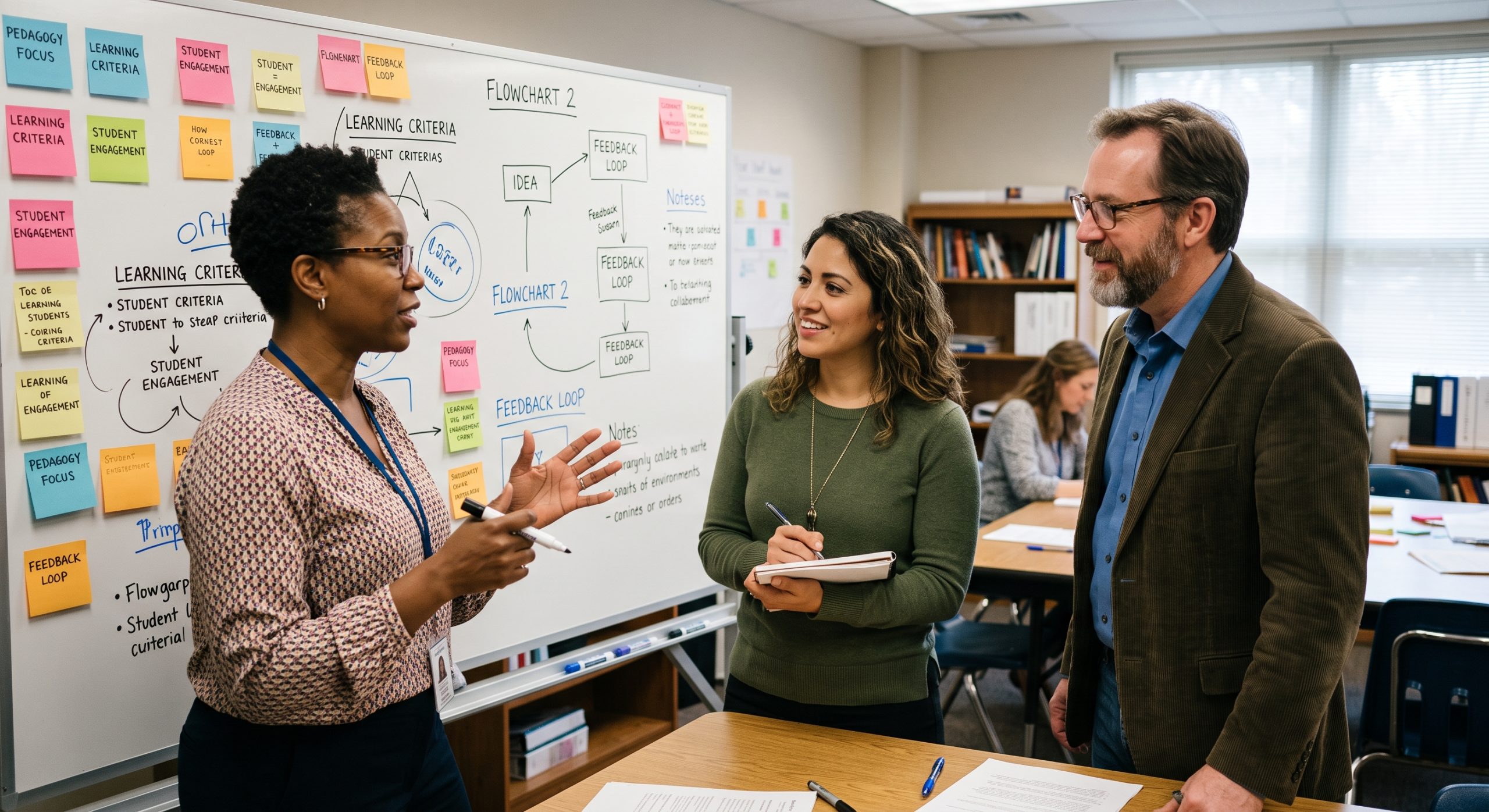
Leading change requires accepting human responsibility to evaluate and regulate artificial intelligence through clear policies.
Rate the post
You might be interested