
by Impuls Educació
Behind Visible Learning lie 2,500 meta-analyses and data from 300 million students, forming the most extensive corpus on educational efficacy in existence. Building on this foundation, John Hattie positions educational leadership as an amplifier of instructional impact. Although leadership operates as a mediated influence filtered through the teaching staff, it boasts a remarkably high effect size of 0.37. To leverage this, Hattie proposes five arguments to move schools out of the stagnant “yellow zone” (effect sizes below 0.40) and firmly into the high-performing “blue zone” (above 0.40). Crucially, cultivating collective teacher efficacy yields an effect size of 1.32, effectively quadrupling the baseline rate of learning.
The Two Zones of Visible Learning
The empirical framework for high-impact leadership is robust, utilizing a key metric: the average effect size, which centers at 0.40 on the continuum of impact. Notably, virtually no educational intervention falls below zero, meaning scarcely any deliberate strategy actively harms students. The rare factors yielding a negative effect—such as bullying (–0.30) and anxiety (–0.50)—predictably reduce achievement. Because 95% to 97% of interventions raise performance to some degree, the true benchmark for success must be set at the system average: 0.40.
The core of Visible Learning consists of contrasting high-leverage influences in the blue zone (above 0.40) with modest ones in the yellow zone (between 0.0 and 0.40), which functions as a counterfactual baseline. Hattie’s ultimate goal is for every student to have a blue-zone teacher.
Longitudinal data across several countries reveals that the typical academic growth a student makes from one academic year to the next corresponds exactly to an effect size of 0.40. Therefore, an educator operating in the blue zone facilitates more than one year of growth for every year of input. Currently, 50% to 60% of schools meet this standard. For blue-zone schools, the mandate is to understand and sustain their excellence; those in the yellow zone must improve. While external excuses frequently surface, the authentic challenge for school leaders lies within their own institutions: minimizing internal variability. The defining question is why one teacher yields blue-zone results while another, in the exact same context, remains in the yellow zone.
The benchmark for a year’s progress is 0.40. Above it lies the blue zone of excellence; below it, the yellow zone of underperformance.

Leadership as an Amplifier
The average effect size derived from nearly 90 meta-analyses on school leadership stands at 0.37. While this metric sits marginally below the 0.40 threshold, it represents a distal, secondary influence that is invariably mediated through the teaching staff. In the landscape of organizational science, a mediated effect size of 0.37 is exceptionally high.
School leaders primarily exert influence through two vectors: magnification and amplification. Their greatest strategic leverage lies in controlling the narrative of what happens within the educational institution. Consequently, two distinct leaders can implement identical initiatives yet produce vastly discrepant impacts on student outcomes. Executive effectiveness hinges less on what they do and far more on the mindsets driving their actions.
Relational credibility is paramount. A leader’s capacity to build trust and engineer psychologically safe environments ultimately dictates whether a faculty can transition from the yellow zone to the blue zone. Crucially, this transition must be framed as professional growth rather than an exercise in deficit-framing or culpability.
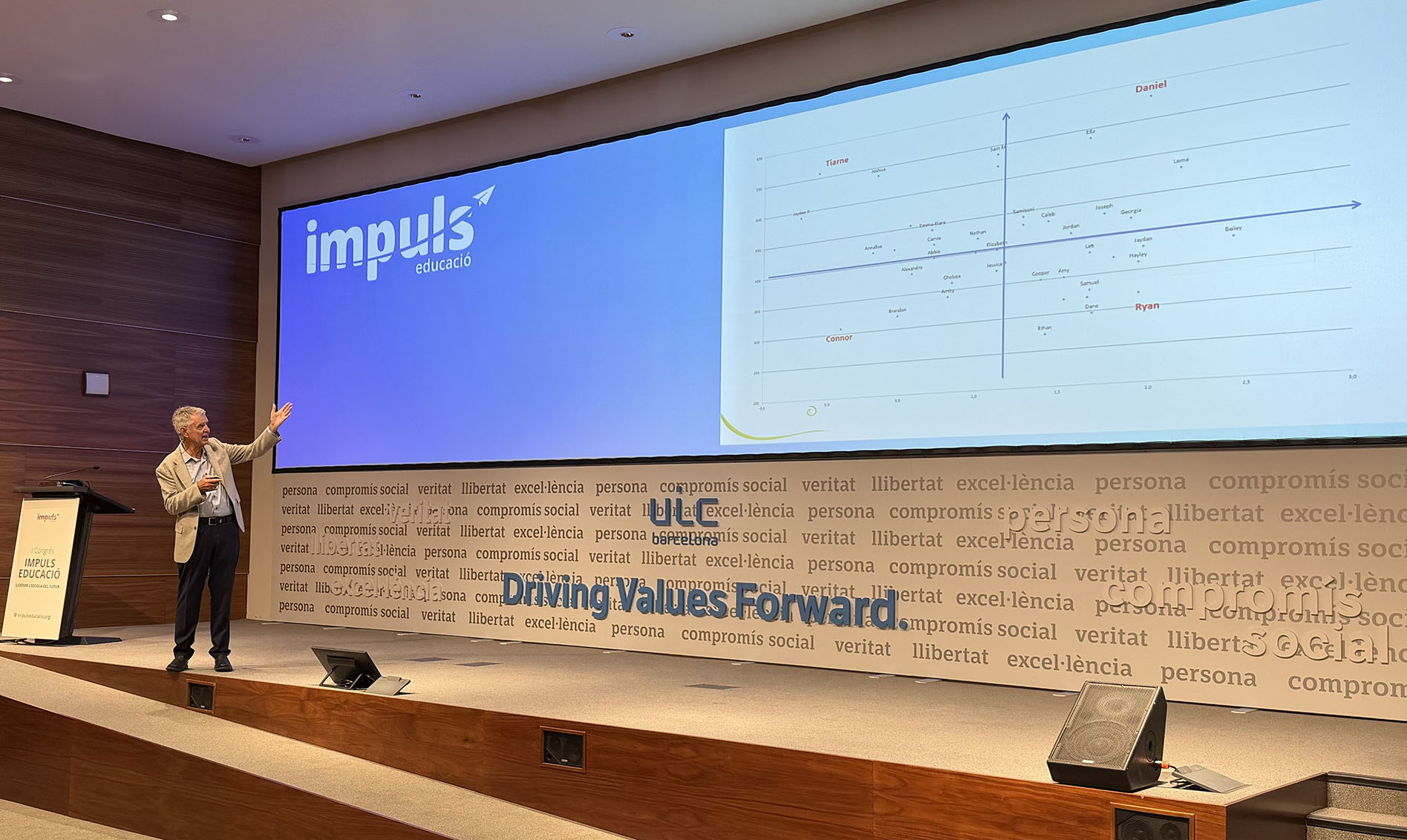
Leadership is not about executing initiatives, but amplifying them. The same plan under a different leader yields vastly different results.
Daily Reality and Leadership Styles
It is a curious anomaly how rarely practicing school principals document their insights on executive stewardship. While career academics publish extensively, very few books are authored by active school leaders. A typical school head navigates between 80 and 120 discrete tasks daily—95% of which are unplanned—yet over 90% report deriving profound professional satisfaction from the role. Codifying these real-world strategies is vital for the profession.
Regarding leadership typologies, early educational research distinguished between transformational leadership and instructional leadership. Transformational leadership prioritizes organizational climate, individualized support, and teacher autonomy. Conversely, instructional leadership maintains a relentless focus on direct classroom observation, data diagnostics, and high academic standards.
Viviane Robinson’s research (2010) decisively established that instructional leadership yields a substantially greater impact on student achievement. The highest recorded effect size within this domain (0.84) emerges when school leaders actively promote and participate alongside faculty in professional learning. While establishing ambitious goals is critical, actualizing these standards is only possible when anchored in relational trust and an optimal school climate. Ultimately, executive leadership bears sole accountability for safeguarding the culture of the entire institution.

Leadership that participates in professional learning achieves an effect size of 0.84, anchoring itself in high relational trust.
Teacher Autonomy and the Coalition of Success
Empirical data indicates that many secondary school educators frequently opt for insular practice, viewing absolute classroom autonomy as a sacrosanct professional value. However, when autonomy is misconstrued as isolation, it fundamentally sabotages the development of a collective, high-impact institutional culture.
The Visible Learning architecture counters this isolation by systematically mapping where each educator falls along the impact continuum. Leadership must intentionally forge a “coalition of success” anchored by blue-zone practitioners, elevating their voices within site-based professional learning, and constructively inviting yellow-zone colleagues to join this collective ecosystem. This mechanism must be executed entirely devoid of shame or blame, relying instead on high relational trust and explicit transparency of intent to drive student progress.
Misunderstood autonomy sabotages collective culture. A true coalition of success invites collaboration rather than assigning blame.

5 Arguments for High-Impact Leadership
1. Redefining impact and the learning environment
First, leaders must redefine how they conceptualize institutional impact. True high impact transcends test scores; it requires engineering a welcoming, secure learning environment characterized by profound psychological safety—specifically, the safety to acknowledge gaps in knowledge and to treat errors as cognitive opportunities rather than sources of shame.
Hattie highlights this imperative through a poignant familial vignette detailing his granddaughter’s first day of schooling. While the child initially approached the classroom with enthusiasm, she quickly spiraled into acute distress upon realizing she could not immediately read, internalizing a deep sense of shame. This everyday episode exposes a systemic pathology: students frequently learn, almost from day one, that a lack of prior knowledge is a shameful deficit rather than the very catalyst for their schooling. The intrinsic motivation to embrace cognitive challenge must be intentionally cultivated, particularly since high-attaining students frequently exhibit extreme risk-aversion, preferring tasks they have already mastered.
Beyond insular staffroom debates regarding competing instructional methodologies, leaders must confront a fundamental truth: at their core, students focus on learning, not teaching. Utilizing analytical diagnostics like the Jenkins curve, school executives must rigorously evaluate whether students maintain an intrinsic desire to process what is being taught. If student engagement plummets upon transitioning into primary education, the institution is demonstrably failing to achieve high-impact status.
2. Prioritizing progress over stagnation and high expectations
School systems must evaluate performance metrics through longitudinal measures of value-added progress over time. A pervasive systemic pathology is the phenomenon of “cruising” schools or classrooms, where students enter with above-average baselines but fail to achieve the equivalent of a single year’s academic growth. Traditional frameworks are frequently adept at remediating underperformance, yet signally struggle to add value to high-attaining cohorts, often masking this stagnation behind a rhetorical obsession with high standards. The most effective institutions are those that, irrespective of their initial intake baseline, generate greater than one year of academic growth per school year.
The rigorous diagnostic analysis of classroom data is entirely decisive here, as illustrated when contrasting high-achieving yet stagnating students against lower-attaining students demonstrating accelerated value-added progress. As Graham Nuthall famously documented, educators remain oblivious to roughly 80% of real-time classroom interactions. Consequently, systematic peer observation and open-to-learning conversations are vital structural interventions that forcefully shift the analytical gaze back toward the individualized progress of the entire student body.
Furthermore, the leverage of educator expectations is extraordinarily potent. Teachers harboring high expectations for all learners effectively double the rate of student learning progress, yielding an effect size of 0.42. Conversely, under low-expectation mindsets, the magnitude of effect collapses to an absolute negligible 0.03. The minimum acceptable professional standard is scaffolding students to realize the potential they believe they possess; the true executive objective is empowering them to far exceed their own perceived limitations. Therefore, institutional professional learning must focus relentlessly on unpacking and elevating teacher expectations, as this cognitive mindset dictates classroom reality.
3. Scaffolding support processes and problem diagnosis
The third argument mandates the institutionalization of targeted support frameworks. As Stephen Covey astutely noted, intense effort expended within an incorrect context is entirely futile. The faculty lounge must transcend traditional socializing, serving instead as a sanctuary for deprivatizing and dissecting authentic problems of practice.
A core executive responsibility of school leadership is ensuring that the correct systemic problem is accurately diagnosed and confronted. Frequently, schools squander resources deploying excellent professional development initiatives in instructional areas where the faculty is already highly competent, leaving the authentic institutional bottleneck untouched. Nuthall demonstrated that between 40% and 50% of the instructional content delivered daily is already mastered by the student cohort, rendering the tasks devoid of real cognitive engagement or desirable difficulty. Leaders must diagnose the right problems, elevate the voices of the practitioners actively solving them, and embed tracking mechanisms to monitor impact—guaranteeing that every student captures at least one year of growth.
4. Collective efficacy in action
The fourth argument centers on the operationalization of collective efficacy. A powerful operational blueprint is found in collaborative, evidence-based moderation protocols regarding student progress against explicit success criteria, which effectively eliminates the systemic confusion and subjectivity generated by disparate grading standards among isolated teachers.
Collective teacher efficacy boasts a staggering effect size of 1.32, effectively quadrupling the baseline rate of student learning. To activate this leverage, the faculty must collectively evaluate their own instructional impact, debate and calibrate expectations, and actively engage as critical friends in peer-to-peer critique.
Concurrently, cultivating collective student efficacy and sophisticated collaborative learning skills is increasingly demanded by the modern labor market.
However, authentic collaboration requires explicit instruction in specific competencies, namely active participation and theory of mind—the capacity to seamlessly navigate alternative perspectives. Without guidance, group work frequently degenerates into pseudo-collaboration, where one highly capable student executes the workload while peers remain passive. Ultimately, deep listening remains the most undervalued skill in the educational landscape; exceptional leaders are distinguished by their capacity for profound, active listening before executing action.
5. The implementation framework and evaluative thinking
The final argument underscores the necessity of a transparent, disciplined implementation framework. Cultivating deep relational trust constitutes the non-negotiable foundational step, systematically forged through active listening, absolute clarity of expectations, and shared accountability for institutional success.
The implementation architecture—formalized via the DIIE model (Diagnosis, Intervention, Implementation, Evaluation)—must invariably initiate with a data-driven, rigorous diagnosis. Subsequent interventions must be directly lockstepped with the diagnosed problem and deployed with absolute fidelity and precise dosage control. For example, while the science of reading is highly effective for decoding mastery, administering intensive phonics drills to students who have already achieved decoding fluency is pedagogically redundant and counterproductive.
The single greatest threat to successful systemic implementation is not active resistance, but rather excessive adaptation or “lethal mutation,” wherein educators incrementally alter an intervention until it merely replicates legacy, comfortable practices under a new rhetorical guise. Leadership must relentlessly foster a culture of evaluative thinking—constantly interrogating empirical evidence of impact, including actively seeking signs that current strategies may be failing—to secure continuous optimization and unlock high-impact outcomes across the entire system.