by Impuls Educació
Second only to classroom instruction, educational leadership stands as the single most influential school-level factor driving student success. Building upon this premise, Anna Jolonch reformulates a fundamental question: what kind of school do we envision, and for what kind of world? In an era marred by warfare, structural inequality, and democratic crises—where a third of young people have lost faith in the system—the answer demands virtuous leaders rather than merely competent managers; leaders who are genuinely capable of cultivating the growth of others. After all, while good leaders transform organizations, great leaders transform people.
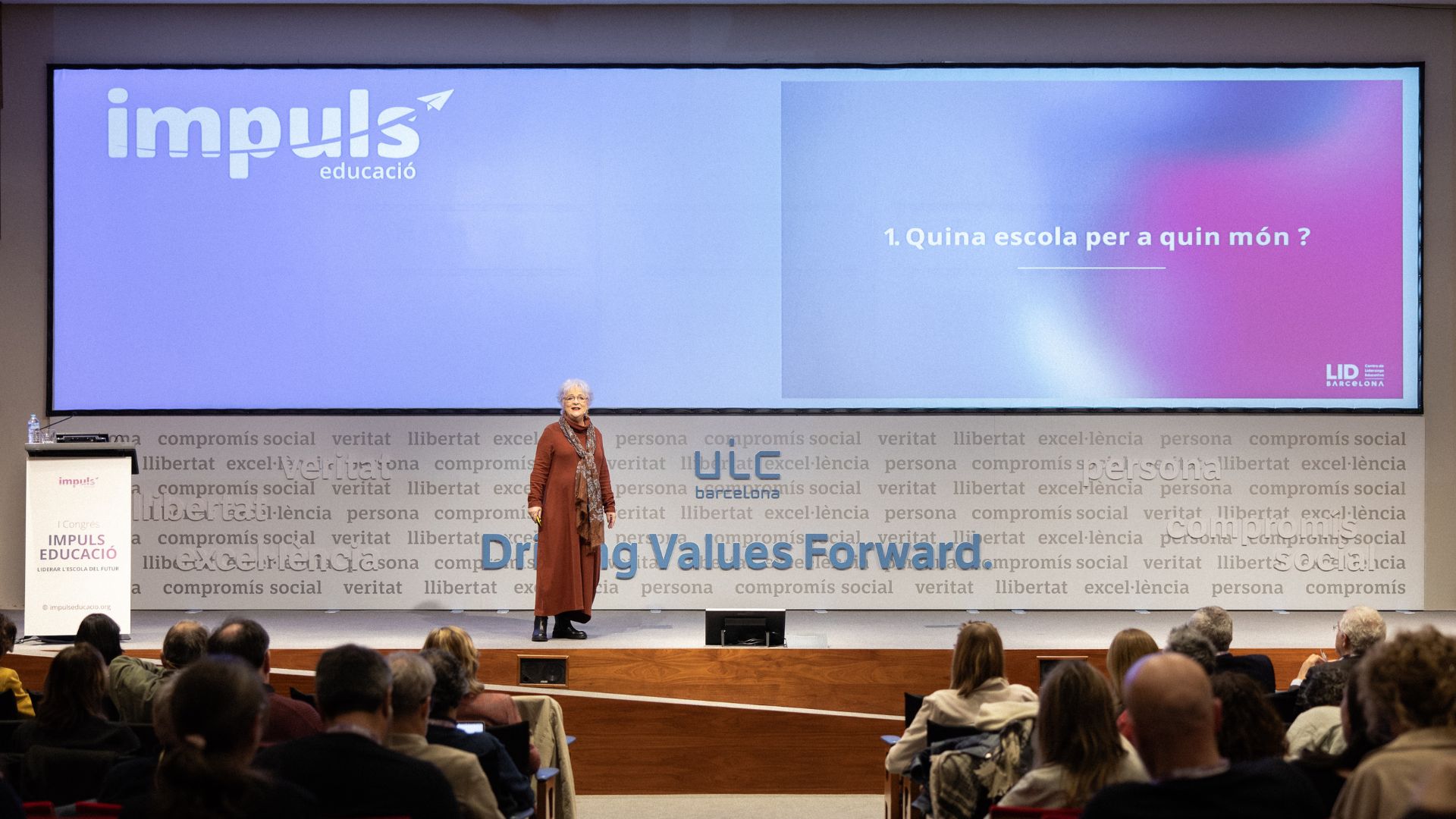
What Kind of School for What Kind of World?
Reflecting on the ideal school for our contemporary world is the defining question of any educational endeavor and pedagogical leadership. Over eighty years ago, the United Nations Charter posited that placing education and culture at the core of global collective interest would safeguard human dignity. Today’s reality sharply contradicts that foundational principle. We inhabit a world plagued by armed conflicts—such as in Ukraine, where thousands of schools have been bombarded—structural violence, exploitation networks, and a democratic crisis that has alienated a third of our youth from the system.
This profound complexity infiltrates classrooms every single morning, turning schools into spaces of resistance that must safeguard shared values and civic coexistence. Education represents both a horizon and a future. Educators bear an immense responsibility: to protect the dignity of every student, acutely aware that a single pedagogical gesture can reshape a life. The ultimate goal is to nurture a critical citizenry capable of reading the world and navigating their own lives autonomously. As Professor Andy Hargreaves reminds us, schools must serve as sanctuaries of belonging. In a world prone to building walls, the school must forge community, honor diversity, and unearth the unique talent within every child, empowering them to believe in themselves.
A single pedagogical gesture can reshape a life. The school must stand as a sanctuary of resistance and belonging.
The Three Poles of Pedagogy: Axiology, Science, and Praxis
Professor Philippe Meirieu conceptualizes pedagogy through three primary poles: the axiological (values and ethics, a dimension explored by Maria Rosa Buxarrais), the scientific (evidence and knowledge, expounded by John Hattie), and the praxiological (methodologies and practice). In the contemporary landscape, pedagogy cannot rely exclusively on empirical science. An evidence-based approach alone cannot dictate the trajectory of an educational vision; rather, it is the axiological pole that determines our direction and defines the ultimate purpose of education.
While neuroscience and cognitive psychology clarify how the brain functions and how learning occurs, they can never prescribe what students ought to learn or which texts they should engage with. A values-driven perspective provides the necessary vision and direction; consequently, educational leaders must anchor themselves in these ethical imperatives before making technical or administrative decisions. Viewed this way, the teaching profession carries a foundational moral purpose: the intrinsic desire to exert a positive influence on others. An effective educational leader engineers the conditions that unlock opportunities for all, cultivating the growth of others and cultivating new leaders in the process. Nevertheless, systemic complexities and widening inequalities severely hamper daily classroom practice.

Science explains how the brain learns, but it can never dictate what students ought to learn.
The Second Most Critical Factor in Student Success
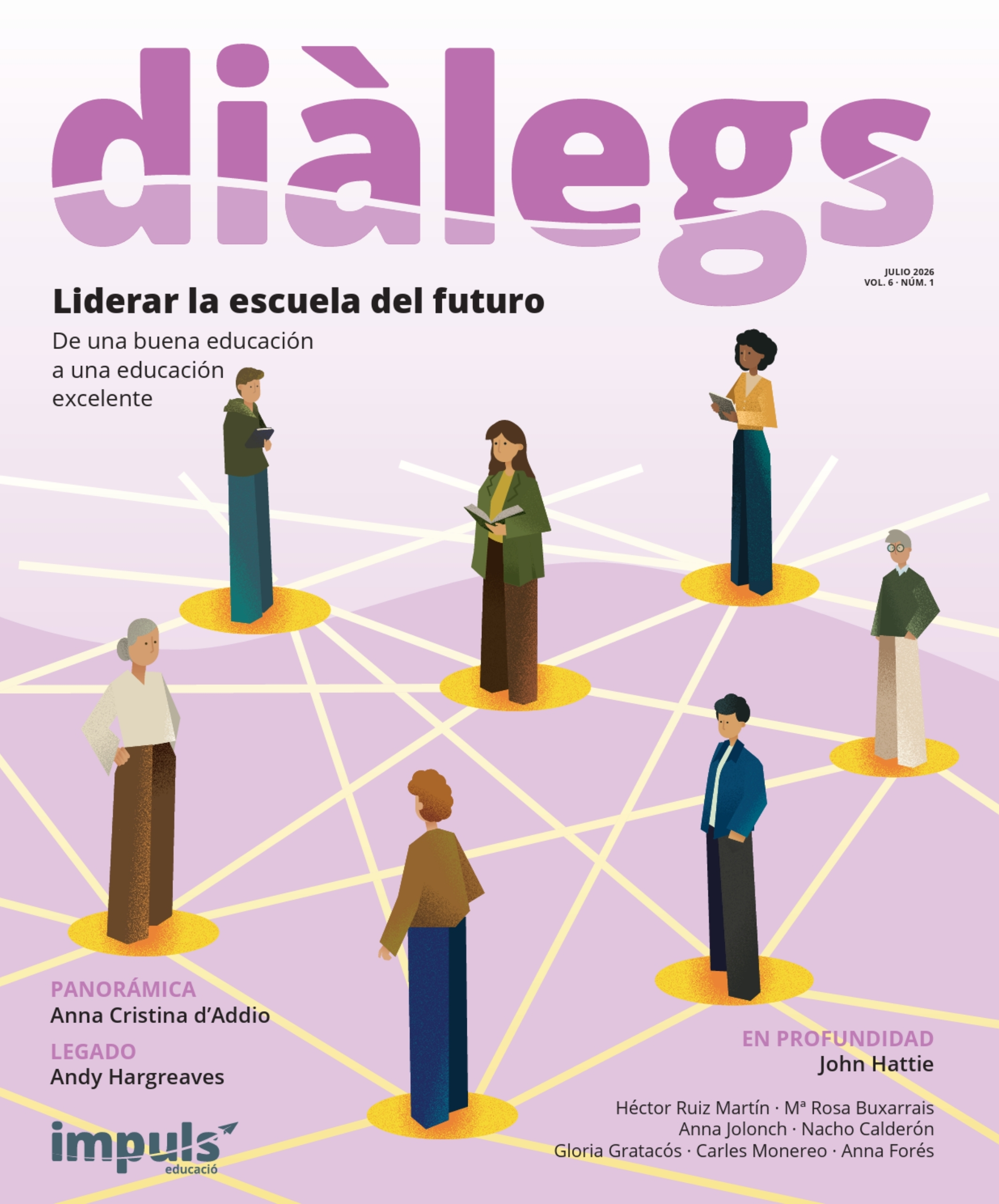
Empirical educational research and recent UNESCO reports, presented by experts like Anna Cristina d’Addio, unequivocally demonstrate that educational leadership is a decisive lever. Investing in the professional development, capacity building, and resources of these leaders ranks among the most cost-effective educational policies available. Moreover, a global consensus has emerged: well-equipped leaders are vital across every echelon of the system—from classroom teachers to school inspectors and district administrators—a reality reflected in the contextually adapted framework developed by LID Barcelona.
Indeed, leadership is the second most powerful school-level variable influencing student outcomes, second only to instructional practice. For leaders to fully exert this influence, however, the system must provide enabling conditions: decision-making autonomy, institutional recognition, structured mentoring, formative assessment, and a drastic reduction in the bureaucratic burden that currently alienates school leaders from the pedagogical stewardship they are meant to provide.
The Virtues of Leadership: Three Dimensions of the Profession
Professor Viviane Robinson highlights the paramount importance of virtuous leadership. In this framework, virtues are neither abstract concepts nor rhetorical embellishments; they are daily, operational practices that define a leader’s methodology. They crystallize into a deceptively simple yet demanding maxim: doing the right work, the right way.
These virtues span three distinct dimensions. First are the intrinsic leadership virtues: an unyielding moral purpose and an unconditional commitment to student learning, entirely divorced from the pursuit of power or personal status. Second are problem-solving virtues: the strategic capacity to prioritize, the analytical acumen to understand phenomena like teacher resistance, and the creative agency to reinvent schools in marginalized communities—as illustrated by the Magnet schools program highlighted by Jesús Moral and Núria Sabaté. Finally, interpersonal virtues anchor the profession: moral integrity, respect, courage, empathy, and the professional humility required to remain a lifelong learner.

Excessive bureaucratic burdens alienate school leaders from the pedagogical stewardship they are meant to provide.
Leading for Learning: Inquiry and Professional Learning Communities
The paradigm of “learning organizations” positions continuous growth at the core of the institution: if educators and leaders stop learning, student progress stalls. This vision unyieldingly demands the success of every single student, without exception.
Drawing from the research of Viviane Robinson and John Hattie, the single most impactful lever an educational leader can pull is promoting the professional learning of their staff. This development must transcend isolated, passive workshops that fail to transfer to the classroom; instead, it must rely on high-impact, sustained models, such as those mapped out in Thomas R. Guskey’s evaluation framework, referenced by Ana Iturbe. To actualize this, school structures must adapt, normalizing collaborative practices like co-teaching and peer observation.
Furthermore, this evolution hinges on a robust culture of teacher inquiry. Prior to launching innovations, teams must systematically investigate and diagnose the specific realities of their classrooms. As Professor Louise Stoll emphasizes, powerful professional development is forged by bringing practitioner experience into direct dialogue with empirical data and academic research. This necessitates dedicated spaces, protected time, and structured protocols to sustain rigorous, learning-focused pedagogical conversations that yield actionable, highly contextualized knowledge.
It is equally vital to cultivate professional learning communities (PLCs) rooted in trust, where peer observation is geared entirely toward continuous improvement rather than performance evaluation. Crucially, this collaborative spirit must extend beyond individual schools, replacing institutional competitiveness with shared collective responsibility.
Teacher Well-being: Transforming Organizations by Empowering People
Educator well-being is inextricably linked to professional growth. Professor Qing Gu notes that much of the contemporary burnout and frustration within the teaching workforce stems from structural barriers that prevent educators from fulfilling the moral purpose of their calling. Beyond competitive compensation or reduced class sizes, the system must offer meaningful pathways for teachers to cultivate their talents, build clear professional trajectories, and step into impactful mentoring roles.
While good leaders transform organizations, great leaders transform people. A school is, first and foremost, a human ecosystem; the cornerstone of its success lies in guaranteeing that every individual has authentic opportunities for professional flourishing. In a fragmented world, education bears the historical mandate of anchoring the society we aspire to build—laying the groundwork for a more just and promising future for all.
The system must provide meaningful pathways for teachers to cultivate their talent, advance along clear career trajectories, and step into mentoring roles.

Rate the post
You might be interested