by Impuls Educació
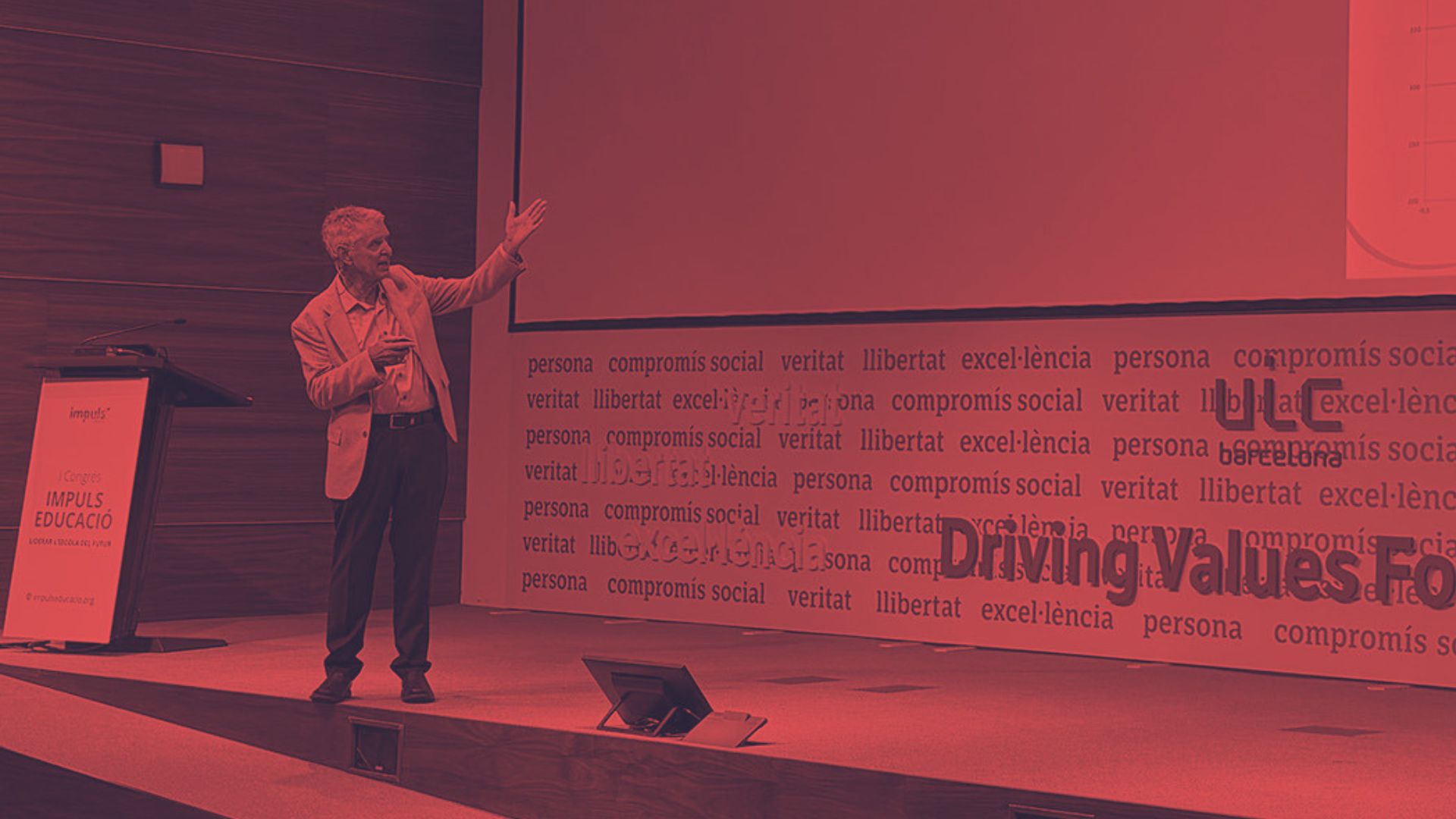
Four pioneering voices convened at the 1st Impuls Educació Congress to interrogate the contemporary challenges facing learning-oriented leadership. Moderated by Enric Vidal, the panel featured John Hattie, author of Visible Learning; Carles Monereo, Professor of Educational Psychology at the Autonomous University of Barcelona; Anna Forés, Director of the Neuroeducation Chair at the University of Barcelona; and Pepe Menéndez, an expert in school transformation. Their discourse moved beyond administrative technicalities to map the essential conditions required for educational leadership to deeply impact student learning trajectories.
The Authentic Leader: Vulnerability, Reflection, and Commitment
Carles Monereo opened the dialogue by anchoring authentic leadership in an approachable, non-defensive posture capable of demonstrating vulnerability and navigating critical feedback. He identified two core capacities necessary to cultivate this state: rigorous self-reflection and the ability to unify a faculty around a shared vision.
Monereo framed reflection through a dialogic lens, describing it as an internal negotiation among the competing roles an educator embodies—evaluator, communicator, rule manager, mentor, and researcher. Drawing on Hubert Hermans’ theory of the dialogical self, he posited that internal democratic dialogue directly mirrors and informs external democratic practice. Authentic leaders must synthesize these diverse internal perspectives to make balanced, democratic choices. Supporting this with empirical evidence from LOMLOE curriculum mentors in Catalonia, Monereo noted that the most effective mentors avoided manufacturing a superficial consensus; instead, they negotiated clear boundaries to build a genuine, shared institutional narrative.
Furthermore, true professional commitment requires viewing colleagues holistically as authentic partners. This demands honoring their individual professional trajectories, granting them genuine agency, and establishing common frameworks for managing institutional crises.
Authentic leaders abandon defensive postures, openly acknowledging their vulnerabilities and actively embracing constructive peer critique.

Learning Consent and Moral Authority
Pepe Menéndez introduced a highly original concept to the panel: the “consent to learn.” Evoking the insights of Begonya Gasch from the Fundació El Llindar, Menéndez argued that young people do not truly become students until they consciously grant this consent. Consequently, a primary obligation of school leadership is to engineer environments rooted in emotional safety, well-being, and a deep sense of belonging. Only within such a culture of trust can leaders establish the moral authority required to inspire personal and academic growth without resorting to coercion.
Aligning his argument with Paulo Freire’s philosophy of dialogic education, Menéndez maintained that schools must reject industrial, mass-production methodologies in favor of negotiating progressive student autonomy. Crucially, this principle extends across the entire institution: faculty members must also recognize themselves as visible, highly valued contributors within a collective mission.
Listening, Bonding, and Exploration: The Leader’s Attitude
Anna Forés expanded the definition of leadership by prioritizing its relational dimensions. Referencing Nélida Zaitegi’s work Alto y claro, she argued that effective executives must embody radical openness and active listening. In a hyper-accelerated society where genuine listening is scarce, this receptive posture serves as a profound mechanism for welcoming others. This attitude requires leaders to routinely re-evaluate their own assumptions with humility and execute course corrections without fear. Forés emphasized that trust—the ultimate antithesis of fear—must be systematically cultivated across the entire educational ecosystem, rather than exclusively within the central executive team.
Carles Monereo built upon this point by citing Néstor Román’s framework of fundamental human needs: the need to feel loved, respected, and actively recognized. The overarching institutional challenge is to ensure that every member of the school community experiences these three affirmations simultaneously.
Forés concluded by highlighting the exploratory mandate of leadership, referencing Genís Roca’s assertion that sustainable innovation requires pioneers. To drive true systemic improvement, school leaders must act as explorers of hidden opportunities—identifying novel pathways and communicating them to their communities with genuine passion.

Trust is the definitive antidote to organizational fear; high-impact leaders act as explorers who communicate new horizons with unyielding passion.
The Courage to Ask Difficult Questions
When asked to isolate specific leadership behaviors that maximize student learning, John Hattie focused on a deceptive imperative: the courage to ask difficult questions, diagnose root problems, and relentlessly pursue their resolution.
Hattie argued that a leader’s core focus must always center on student impact. The primary goal is to empower every child to view themselves as an active learner, and leadership must grant students explicit permission to exercise curiosity while making their learning visible. Achieving this requires leadership teams to remain open to learning themselves. Hattie observed that too many schools are closed to learning, remaining open only to teaching. High-leverage leadership forces a shift in focus toward what students are actually internalizing and whether that knowledge yields a measurable difference.
According to Hattie, children are inherently sophisticated learners, as evidenced by their deep engagement with video games and social networks—spaces that offer immediate interaction and validate their agency. Leadership teams must display the institutional courage necessary to listen to and learn from these authentic voices of learning.
How New Leaders Are Formed: Legacy, Network, and Mentoring
The panel offered three distinct, complementary models for cultivating successor leadership within schools.
Carles Monereo described the human mind as a complex social laboratory. When navigating organizational conflict, an effective leader must mentally simulate scenarios to comprehend alternative viewpoints and build sustainable agreements. He noted that systemic transformations inevitably trigger friction due to the emotional toll of change. Often, empirically validated methodologies fail to endure because they are imposed without considering the school’s unique culture. Consequently, leadership development must prioritize the capacity for sophisticated negotiation, ensuring leaders treat teachers as authentic partners rather than mere compliance agents.
Pepe Menéndez focused on executive accountability, urging current directors to establish structured succession pipelines before completing their tenure. He framed this as an ethical obligation to leave a legacy rooted in exemplary practice. For Menéndez, educational leadership is the manifestation of a shared life project built on common values—an endeavor that demands vision, enthusiasm, and a willingness to take calculated risks.
Anna Forés added a structural perspective, warning leaders against the trap of isolation. In complex systems, organizational components behave non-linearly. High-impact leadership depends on surrounding oneself with exceptional talent to sustain the collective vision. A leader’s true strength resides within the affective and effective support networks they intentionally build around their office.
Isolating oneself is an executive trap; a leader’s authentic strength is derived from the affective and effective networks that surround them.

Low Results: Prioritizing Progress Over Achievement
When addressing underperforming schools, John Hattie introduced a critical distinction: the most pervasive executive error is obsessing over absolute achievement metrics rather than longitudinal progress. Leadership must focus heavily on value-added growth. Every school houses localized pockets of success where specific educators generate exceptional student growth. The core task of leadership is to identify these high-impact practices and scale them, ensuring their underlying expectations permeate the entire institution.
This strategy requires the institutional courage to reward demonstrative student progress over mere faculty seniority. Leaders must secure short-term wins by ensuring students understand how to learn and by accurately diagnosing learning gaps. Hattie emphasized that underperformance is rarely solved by rewriting curriculum; it is solved by actively supporting the educators who move the needle.
Carles Monereo proposed a complementary strategy: target the school’s institutional zone of proximal development by scaffolding existing high-leverage practices. Systematically documenting these internal successes ensures they survive faculty turnover, allowing a school project to advance through secure, iterative steps.
Pepe Menéndez highlighted organizational communication, noting that leadership dictates the dominant narratives within a school. When professional meetings focus on student potential and pedagogical efficacy, a positive culture gradually reshapes the entire institution. He reminded the panel that a faculty is continuously trained by the way its meetings are managed.
Anna Forés concluded by emphasizing the power of visual symbolism. When an institution deploys evidence-based strategies, it must communicate them clearly to its community. She shared an example of an underperforming school with historically low graduation rates that began displaying a star for every student who completed secondary education. This simple visual symbol motivated the student body and offered proof that academic success was attainable.
Families and Learning: Changing the Questions
Regarding family engagement, John Hattie advocated for shifting the questions schools prompt parents to ask. Rather than focusing on grades, parents should ask children what specific feedback they received from teachers and what cognitive difficulties they overcame during the day. Educators have an obligation to provide families with clear evidence of authentic learning progress while building confidence in the instructional methodologies deployed.
Pepe Menéndez aligned this with organizational practices, noting that traditional parent-school meetings focus heavily on technical or logistical compliance. Reframing these community dialogues around the actual mechanics of learning builds a much tighter, more productive alliance between families and the school.

School communities must reframe their primary metrics, shifting parent dialogues from static grades to the specific challenges students have overcome.
Time, Bureaucracy, and Resilience: Sustaining the Profession
Addressing the challenge of transforming vulnerable schools while managing heavy administrative workloads, Anna Forés noted that time is fundamentally a reflection of institutional priorities. If a leadership team fails to dedicate time for collaborative dialogue, sustainable professional learning becomes impossible.
Carles Monereo offered a data-driven approach: maintaining clear analytics on student trajectories allows leaders to personalize instruction and anticipate critical incidents, reducing the reactive crisis management that often consumes the workday.
John Hattie focused on collective responsibility. Echoing Andy Hargreaves, he noted that Martin Luther King Jr. did not capture the world’s imagination with a strategic plan, but with a dream. A faculty needs to understand the overarching dream of its leadership; if management is reduced to bureaucratic compliance, the school fails. Hattie challenged the narrative surrounding administrative overload, noting that empirical evidence often reveals that required regulatory compliance consumes minimal time. Instead, bureaucracy frequently serves as an excuse for redundant, internally perpetuated practices.
The panel concluded by discussing community resilience. Pepe Menéndez argued that resilience is directly linked to organizational purpose. When a school community shares a compelling dream, it can navigate severe adversity, a process accelerated by the non-verbal cues and mindset of the leadership team.
Carles Monereo added a final tactical recommendation: leaders must intentionally protect and reward highly dedicated teachers who take on the most complex institutional tasks. Providing organizational recognition and support to these frontline educators is vital to prevent professional burnout.
Anna Forés synthesized the debate by identifying the two pillars of educational resilience: a unified, shared organizational purpose and a robust, supportive community network. Every other leadership initiative, she concluded, builds upward from this foundation.
A faculty must understand the core dream of its leadership; organizational resilience relies entirely on shared purpose and robust community networks.

Rate the post
You might be interested