by Impuls Educació
Integrating generative artificial intelligence into the classroom is fundamentally a pedagogical challenge, not a technological one. This is the central thesis championed by Óscar Secorún Lupón, drawing upon his extensive tenure at Google, his background as a mathematics educator and industrial engineer, and the latest data from the OECD’s Digital Education Outlook report. Rather than yielding to the temptation of measuring learning solely by the final generated output, Secorún reclaims the value of the process itself: while an AI-generated text or infographic can be produced instantaneously, genuine comprehension only emerges when a student can independently articulate what they have learned. His framework is underpinned by critical thinking, institutional data privacy, and a completely redefined assessment paradigm.
A Mission Redefined by AI
This address examines the evolution of Google, the trajectory of artificial intelligence integration, and the contemporary needs of the educational ecosystem—from classrooms to ministries of education and universities. Since its inception, Google’s core mission has been to organize the world’s information, making it universally accessible and useful. This objective takes on a particular urgency today, as universal learning and personalized student attention demand the highly refined solutions that artificial intelligence can provide.
Crucially, Google boasts a long-standing history of integrating artificial intelligence. While the concept has only recently dominated media headlines, the company has quietly embedded AI into everyday products for years: predictive text in emails, smartphone dictionaries, and recommendation algorithms on search engines and YouTube are prime examples. Today, over two billion people seamlessly interact with tools powered by this technology without a second thought.
The question is no longer whether AI will permeate the classroom, but rather what pedagogical criteria will guide its integration.
A Scientific Endeavor: DeepMind and the Nobel Laureates
Beyond the ubiquitous search engine and educational tools, Google operates as a fundamentally scientific enterprise. As a testament to this scientific rigor, Secorún points to the three Nobel Laureates on its roster. Demis Hassabis and John Jumper, awarded the 2024 Nobel Prize in Chemistry, lead the Google DeepMind team alongside Vice President Oriol Vinyals. DeepMind has pioneered breakthrough projects with massive scientific impact, most notably AlphaFold, which maps protein folding to catalyze advancements in biology and medicine. Similarly, Michel Devoret has earned widespread recognition in physics for his work at Google Quantum AI, where quantum computing intersects with artificial intelligence.
Parallel to its biological research, DeepMind drives initiatives like AlphaGenome, advanced robotics, and high-precision meteorological modeling designed to anticipate natural disasters. The overarching objective is to ensure artificial intelligence serves humanity as a whole, keeping rigorous science and learning at the absolute forefront.
LearnLM and NotebookLM: AI Built for the Classroom
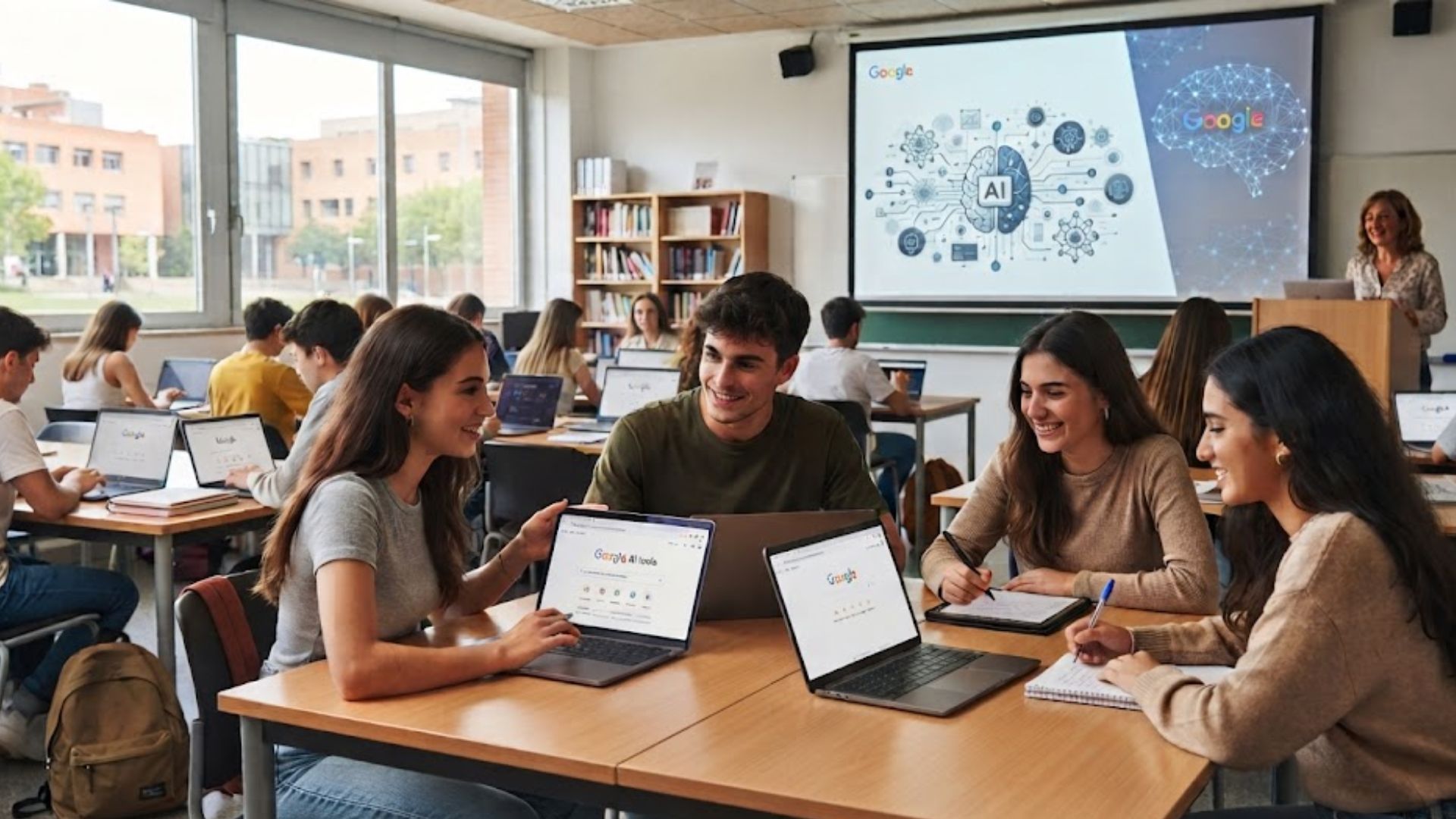
Artificial intelligence is radically changing how we solve problems and slashing the time required to synthesize content. Within the educational sphere, this transformation deeply alters how students learn and study, and how educators teach. In response, Google has engineered specialized tools like Gemini for Education and NotebookLM, both powered by its proprietary underlying engine, LearnLM.
As Secorún emphasizes, LearnLM is not a commercial consumer product retrofitted for the classroom; it is a foundation model intentionally built and fine-tuned for education, deeply rooted in the learning sciences. This engine is embedded across Google’s own ecosystem—Google Classroom, Gemini, YouTube—as well as third-party platforms like Khan Academy. In Gemini, for instance, the guided learning feature intentionally avoids giving direct answers; instead, it leverages Socratic questioning to scaffold the student’s independent journey of discovery.
Currently, one of the most compelling tools is NotebookLM. This specific AI is completely insulated from hallucinations; it generates responses exclusively from the source materials—such as PDFs, presentations, and web pages—uploaded and verified by the user. It operates, therefore, as an intelligent workspace that resolves queries and synthesizes study aids, like infographics and mind maps, strictly from the provided source data.
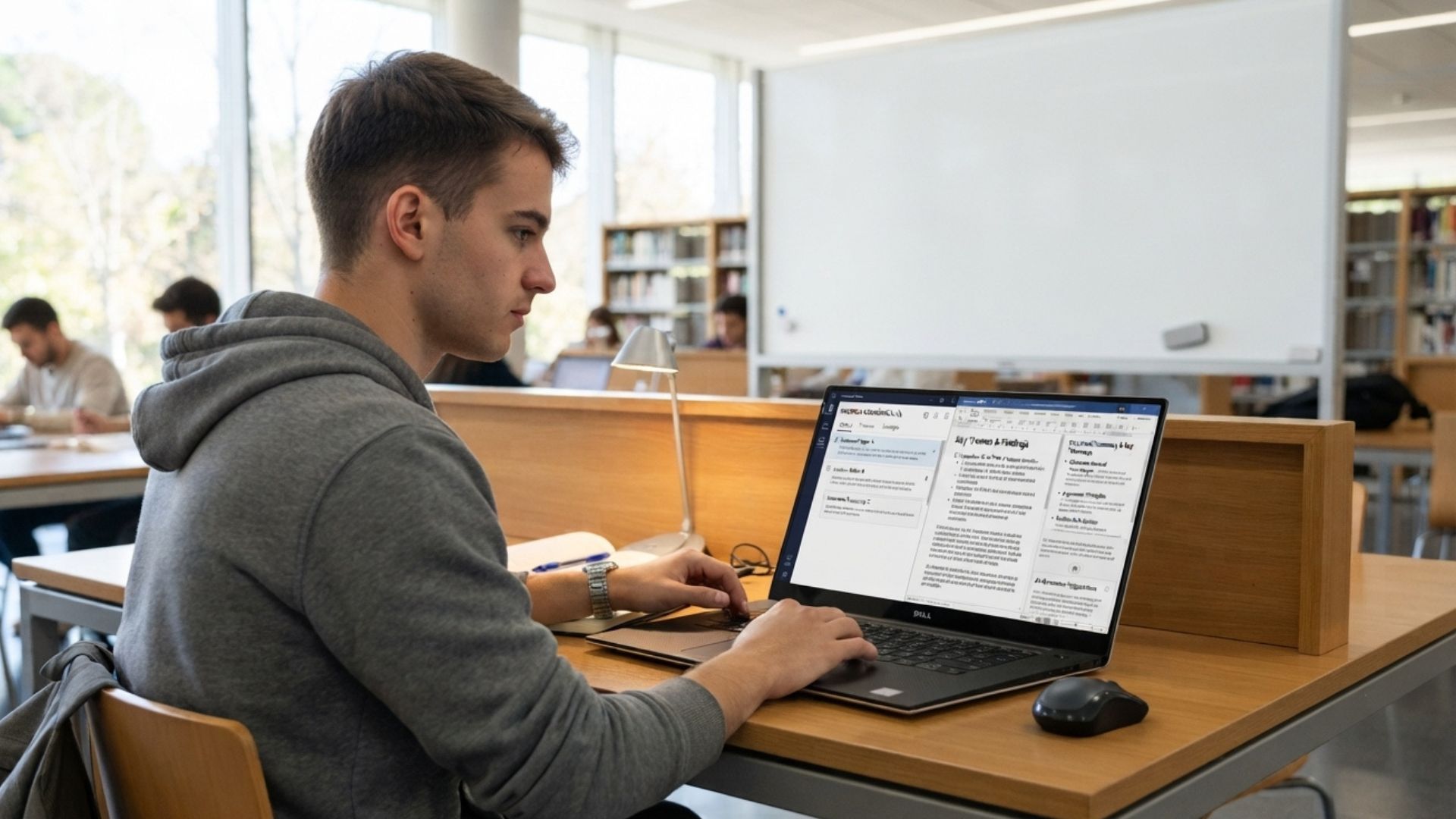
LearnLM is a model purpose-built for education. Within Gemini, Socratic inquiry replaces the passive delivery of direct answers.
Critical Thinking Before the Tool
Speaking from his dual perspective as a parent, a former mathematics teacher, and an industrial engineer, Secorún’s primary concern is not how children interact with technology, but how they learn and what enduring capabilities they develop along the way. The most vital competency students must acquire is critical thinking coupled with a deep, conceptual understanding of their material. This shift necessitates a profound paradigm change. We must definitively transcend the era of measuring learning through high-stakes rote examinations—the kind that leave students feeling intellectually drained the moment the test concludes.
Authentic learning is demonstrated when a student can confidently explain a concept in their own words. Consequently, it is vital to balance technological workflows with analog methodologies, deliberately cultivating oral expression and reading comprehension.
Data Privacy and Security: The Institutional Mandate
Deploying AI-driven educational tools requires an unyielding commitment to student data privacy and security. At this juncture, it is critical to distinguish between commercial consumer accounts—where data routinely fuels the provider’s business model—and institutional educational accounts. Within a validated educational domain, data privacy and security operate at an enterprise grade: Google does not train its AI models on user data from educational accounts, never shares it with third parties, and grants institutions total governance over their information. Furthermore, these environments strictly comply with rigorous frameworks like the High Level of Spain’s National Security Framework (ENS) and the General Data Protection Regulation (GDPR).
Secorún warns that logging into third-party commercial products with institutional credentials is a critical error; if the platform fails to recognize the educational nature of the domain, student data may inadvertently be harvested to train commercial models entirely alienated from the school environment.
Data governance is non-negotiable. Using improper channels can result in student data being harvested to train commercial models.

The OECD Roadmap: Four Keys to Generative AI Integration
Integrating artificial intelligence into education remains a pedagogical challenge rather than a technological one. The OECD’s Digital Education Outlook report on the effective deployment of generative AI in education offers striking insights. Paradoxically, the study reveals that the tasks causing educators the highest levels of stress are administrative duties and assessment workflows. Artificial intelligence can effectively mitigate this administrative overload, acting as a micro-assistant that boosts productivity and frees educators to focus squarely on pedagogy.
The report outlines four fundamental imperatives:
1. Students must be taught to think critically before drafting instructions, or prompts. Prior to interacting with an AI tool, they must structure their thought process and clearly define the objective of their query.
2. Algorithms suggest, but educators decide and validate the workflow; under no circumstances should AI outputs be blindly accepted.
3. Educational tools must be designed by instructional teams for explicit educational purposes, rather than being late-stage adaptations of mass-market consumer tech.
4. Technology must empower rather than surveil. The objective should not be to police whether students use artificial intelligence—its adoption is inevitable. Prohibition and disciplinary oversight are futile; the solution lies in a profound transformation of our assessment methodologies.
Process over product
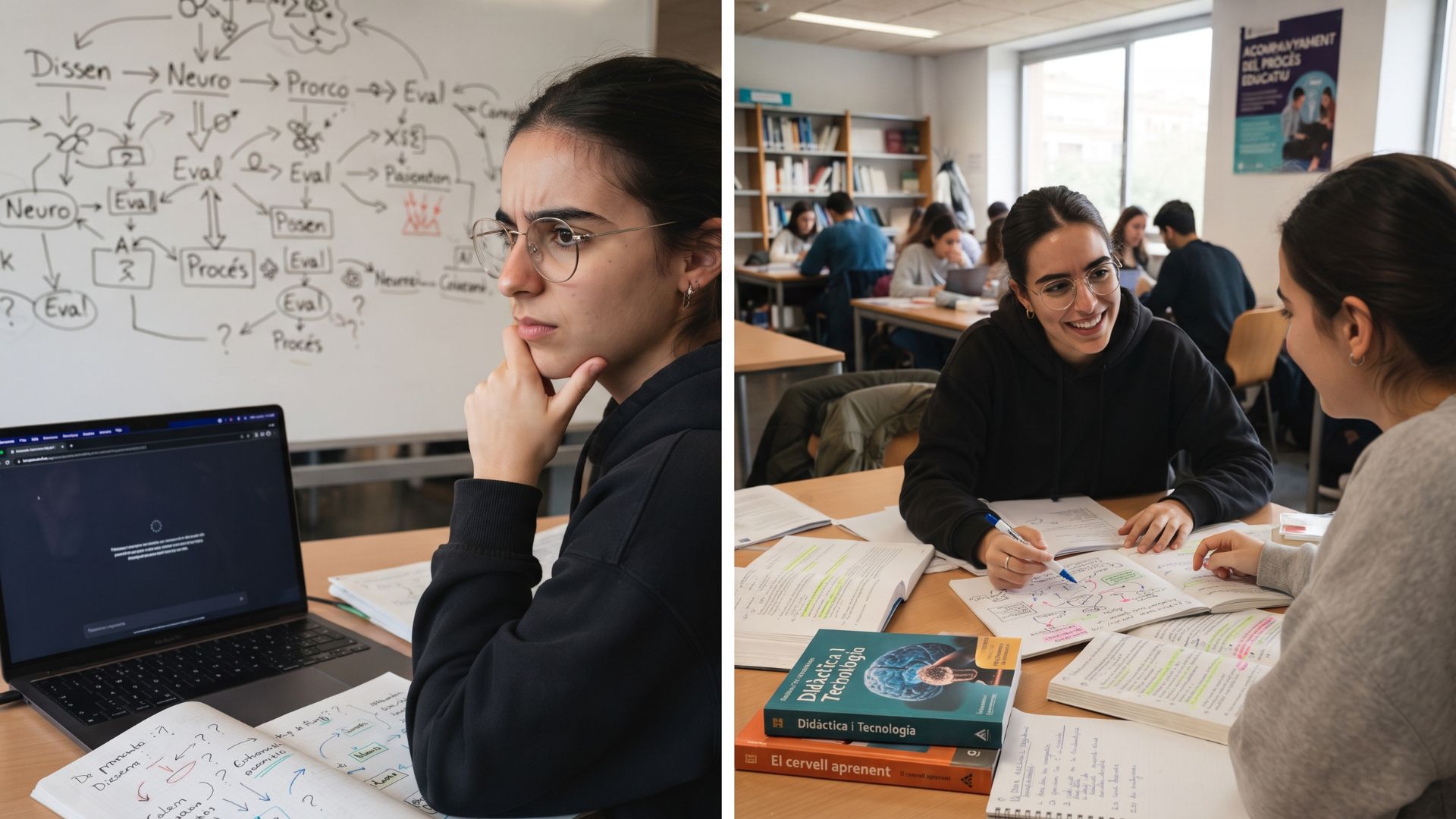
The closing reflection — and the most transcendent, according to the speaker — is that the generated result, the output, is not synonymous with learning. Producing an infographic or an essay using AI is an almost instantaneous act that does not imply any kind of understanding. Authentic learning resides in the process: in the cognitive journey to decipher a concept and, most especially, in the ability to transfer it and explain it to a third party. It is here where the true virtuous circle of education is articulated.
The practical implication of this premise is direct: assessment must shift the focus from the final product toward accompanying and comprehensively evaluating the learning process. Ultimately, leadership teams and those responsible for designing technology integration policies in schools must assume this distinction as a foundational starting point, rather than an afterthought added later.