by Impuls Educació
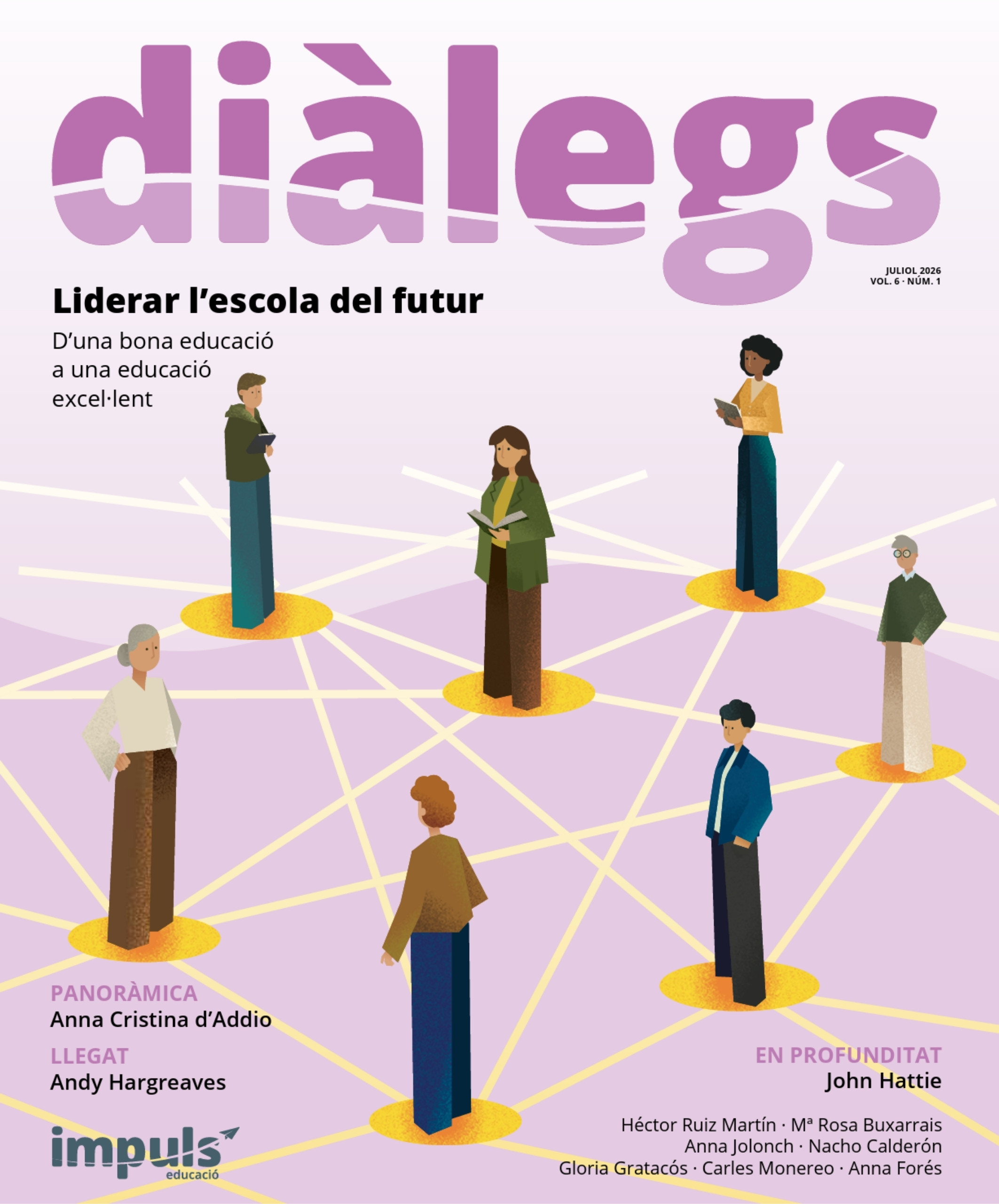
Dwindling student achievement across high- and low-income nations, a mounting teacher shortage, youth mental health crises reaching a breaking point, accelerating digital transformation, climate disruption, and widening systemic inequalities. At the inaugural keynote of the 1st Impuls Educació Congress, Anna Cristina d’Addio—a leading voice behind the UNESCO GEM Report—positions educational leadership at the very heart of the global response. The data is unequivocal: leadership stands as the second most influential school-level variable driving student success, second only to classroom instruction. This underscores her opening thesis: education is not transformed by policy mandates, strategic plans, or theoretical frameworks. It changes through people.
The Urgency: A Complex Global Landscape
Student achievement is declining globally, even within wealthy nations, while the population of out-of-school children continues to rise. Concurrently, the fiscal prioritization that governments worldwide allocate to education is either stagnating or shrinking. This compounds a litany of pre-existing challenges exacerbated by the pandemic: learning loss, acute teacher shortages, deteriorating mental health among students and educators alike, the relentless pace of digitalization, the climate crisis, and ever-deepening inequities.
Yet, amidst these challenges, ground-breaking innovations, novel pedagogies, and unprecedented coalitions are emerging. The core question—posed by d’Addio from the outset—is no longer whether education must change. Change is inevitable. The real question is how we lead it.
The fundamental question is no longer whether education must change—change is inevitable. The question is how we lead it.

Leadership as a Pedagogical Force
Recent data confirms that leadership lies at the core of any school improvement process. The 2024–25 GEM Report underscores this with hard numbers, ranking it as the second most powerful school-level factor, trailing only classroom instruction. Effective leadership enhances teaching quality, fosters a thriving school climate, boosts teacher retention, and, ultimately, drives student achievement.
This directly challenges a long-held misconception: that running an educational institution is merely an administrative task, subsidiary to what happens inside the classroom. Far from it. Leadership is inherently a pedagogical practice. Educational transformation does not occur through policy documents or theoretical frameworks; it is driven by individuals who steer the vision, build trust, cultivate professional growth, and engineer the conditions necessary for learning to thrive.
This principle permeates every echelon of the system—from school principals and informal teacher-leaders to district administrators, higher education executives, and ministry officials. Leaders at all levels dictate how resources are allocated, how faculty is supported, how equity and inclusion are championed, and how the wider community is engaged.

Robust leadership enhances teaching quality, fosters a thriving school climate, and, ultimately, drives student achievement.
From Heroic Leadership to Collective Capacity
Leadership, d’Addio reminds us, is not about management, command, or control. It is about exercising influence, providing direction, cultivating trust, maintaining systemic coherence, and sustaining a shared purpose. It is a process, not a position. Consequently, it is not confined to those who formally head an institution or decree regulations from a ministry office; it is equally present in a teacher mentoring a colleague, a technical advisor bridging policy and practice, a university team nurturing professional culture, or communities advocating for their students.
Effective leadership is inclusive, distributed, evidence-informed, context-sensitive, and learning-centered. The GEM Report underscores that today’s educational leaders navigate an exceptionally fraught landscape. They are tasked with boosting student achievement, supporting staff well-being, integrating emerging technologies, responding to rapid societal shifts, and safeguarding the system against an uncertain future. In this high-stakes equation, the myth of the heroic, solitary leader is untenable; instead, systems must build collective capacity.

In an era of profound complexity, effective leadership must shift from an individual construct to the cultivation of collective capacity.
High-performing educational systems thrive on robust professional cultures. This demands three deliberate paradigm shifts: from bureaucratic compliance to a shared culture, from administrative supervision to professional support, and from individual authority to collective responsibility. Leading through this lens builds capacity rather than concentrating power.
We must transition from regulatory compliance to culture, from supervision to support, and from isolated authority to shared responsibility.

A Commitment to the Future of Education
Deliberating on educational leadership, d’Addio insists, is far from a mere academic exercise. The discourse directly impacts the classroom, shaping the realities of educators, students, and communities alike. The ultimate objective is to harness leadership as a powerful engine for social justice, instructional quality, equity, and opportunity.
Achieving this demands three core attributes. First, courage: the willingness to challenge deep-seated assumptions, pose uncomfortable questions, and de-stigmatize failure by sharing it as transparently as success. Second, collaboration: working within and across disciplines, recognizing that the most innovative breakthroughs occur at cross-disciplinary intersections. Finally, purpose: a steadfast reminder that leadership is fundamentally about people—ensuring that every student flourishes, every professional grows, and educational systems are designed to serve human needs rather than chase efficiency for its own sake.
The future of education is not forged in political arenas. It will be authored by those who remain relentlessly focused on learning, invest heavily in educators, listen deeply to communities, and champion equity as a core responsibility rather than a mere slogan. This is the essence of educational leadership: an engine of quality, a lever for inclusion, a vital bridge between policy and practice, and an unyielding commitment to the success of every student.