by Impuls Educació
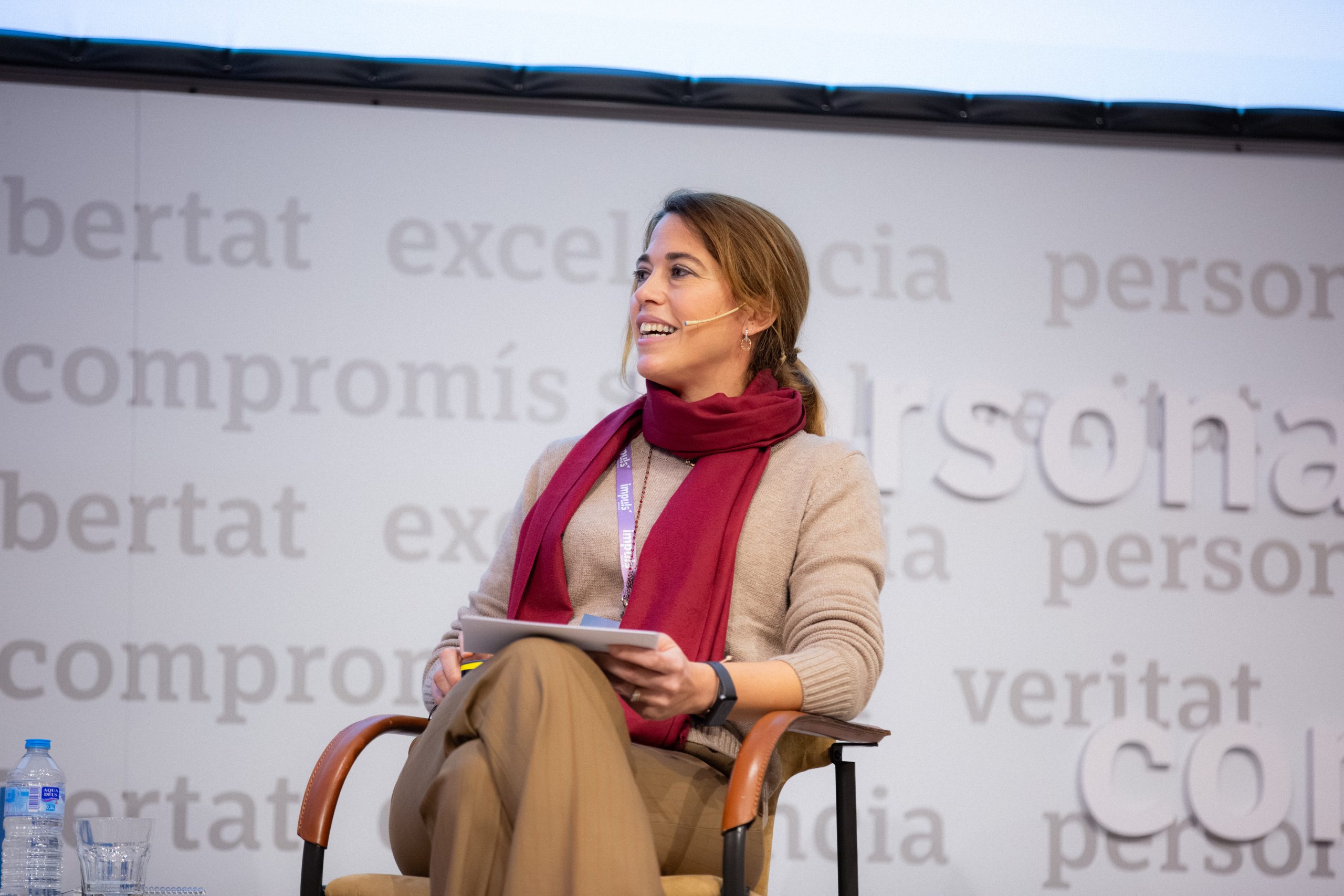
Chaired by Coral Regí, a panel of four prominent voices from Catalan school leadership explored grassroots experiences of systemic educational transformation within their respective institutions. Jordi Musons, Xavi Ros, Xavier Solé, and Núria Cagigós—each operating within a distinct institutional landscape—shared the strategic levers that have enabled them to sustain deep-seated change among their faculties. These levers include cultivating the leadership team as a cohesive, collegiate body; articulating a clear, unwavering purpose within public education; ensuring absolute alignment between institutional philosophy, discourse, and spatial design; and developing highly visible classroom practices anchored in empirical research. Together, these four case studies offer a unified response to a critical question: how highly effective leadership for learning seamlessly manifests in the daily operations of an educational institution.
The Leadership Team as a Collegiate Body
Jordi Musons opened the panel by de-centering the myth of the solitary leader, a shift informed by years of cumulative operational experience. While the institutions undergoing these transformation processes span highly diverse organizational typologies—ranging from asynchronous structures to legacy projects with a marked historical identity—he argued that relying on individual leadership is fundamentally inadequate. Instead, the long-term sustainability and consistency of an educational project must rest squarely upon the leadership team—a collective body that institutionalizes the vision irrespective of its transient individual members.
One of the most critical insights gleaned from his tenure is the absolute necessity of scaffolding and caring for the leadership team itself, given the acute pressures and sheer complexity of daily executive decisions. Musons recommended configuring pluralistic leadership teams that deliberately integrate three non-negotiable profiles: strategic visionaries attuned to macro-trends in global education; divergent thinkers capable of designing innovative, lateral solutions rather than merely diagnosing systemic friction; and representatives who reflect the demographic and cognitive diversity of the faculty across age, gender, and disposition.
Furthermore, institutional decision-making must be anchored in scientific evidence, intentionally dismantling the operational inertia born of subjective biases. The executive team must project an inspiring, forward-looking vision and continuously communicate it to the teaching staff, thereby embedding shared meaning into every daily action. Today, Musons warned, the administrative workload heavily outstrips the capacity of traditional, lean leadership structures. This reality, coupled with generational shifts that rightly prioritize work-life balance, mandates an urgent resizing of these executive teams.
Among the concrete tactical successes of this transformation, he highlighted co-teaching as a foundational structural lever to foster pedagogical synergy and shatter classroom isolation during change cycles. Organizational transparency, systemic agility, and the executive humility to step back and rectify missteps emerged as equally vital attributes. Sustained evolution demands progressive empowerment, granting teams the requisite time to internalize and assimilate new methodologies. Ultimately, the mandate of the leadership team is to ensure that no educator is left isolated, to deeply accompany the professional learning journey, and to actively cultivate networks with external institutions.
Relyaing on an individual leader is insufficient. Sustainable transformation must rest upon a pluralistic, collegiate leadership team.

Sustaining Change within Public Education
Xavi Ros addressed the complexities of systemic transformation through the specialized lens of the public school sector. Driven by an imperative to deepen inclusion, catalyze deep learning, and guarantee a psychologically safe climate, his institution deployed tailored learning pathways, rigorous formative assessment, and cross-disciplinary thematic domains.
Sustaining this momentum is exceptionally complex, particularly when compounded by high faculty attrition and the diminishing autonomy of public school leaders over talent acquisition and staff selection. Compounding this challenge is a mounting wave of external sociopolitical pressure that routinely labels pedagogical innovation as suspect and clamors for a regression to traditional, didactic models.
To buffer against these headwinds and preserve institutional transformation, his school deploys five core strategies:
- Articulating an explicit purpose for every administrative and instructional action, communicating it relentlessly because progressive models demand greater cognitive investment and require clear, evidence-based pedagogical justification.
- Leveraging site-based professional development and collective inquiry as the primary engines of change, anchoring this growth in non-evaluative peer observation and continuous improvement.
- Structuring an elegant, distributed leadership framework comprising multiple collaborative planning spaces and steering committees, where the executive cabinet functions primarily as an ecosystem facilitator.
- Ensuring the educational blueprint is perceived as intrinsically just, highly ambitious, and ethically ironclad, particularly regarding its mandate for equity and full inclusion.
- Intentionally forging cohesion within the human capital ecosystem by celebrating institutional milestones, cultivating mutual support, and prioritizing professional well-being—thereby transforming the school into a genuine sanctuary of safety and asylum for its teachers.
Alignment, Spaces, and Institutional Narrative
Xavier Solé outlined the strategic deployment of personalized learning models within his institution—a direct response to an increasingly diverse student demographic where standardized, one-size-fits-all frameworks had demonstrably failed. This evolutionary curve was intentionally non-linear. Implementation began as a targeted pilot within the early childhood cycle, creating a scalable blueprint that was later expanded across all remaining key stages through a shared commitment to vision and purpose.
Solé argued that leadership must operate using highly robust, conceptually clean paradigms rooted in unconditional trust in the child’s inherent capacity—viewing the student as a seed that already contains the latent blueprint for its own holistic development. Absolute alignment between internal thought, public discourse, and classroom execution is what grants authenticity and resilience to an educational project.
To mitigate the systemic challenge of faculty instability, their model focuses heavily on a rigorous, highly deliberate onboarding framework for incoming educators, integrating them through institutional rituals that explicitly validate and honor their distinct professional biographies. Concurrently, the physical design of the learning environment serves as a powerful methodological catalyst. Dismantling traditional raised lecterns and front-facing rows physically impedes a regression to passive, teacher-centric lecturing, structurally lockstepping the physical space with the progressive educational model.
The architecture of this project is anchored across three strategic axes: heritage—recognizing and honoring the institutional history; meaning—co-constructing collective agreements and driving pedagogical reflection with the community; and direction—relentlessly steering all organizational action toward a unified goal. These axes are further reinforced by crafting a powerful, shared institutional narrative, deprivatizing best practices to make them highly visible, maintaining openness to the surrounding ecosystem, and building external networks to permanently cement the school’s culture.
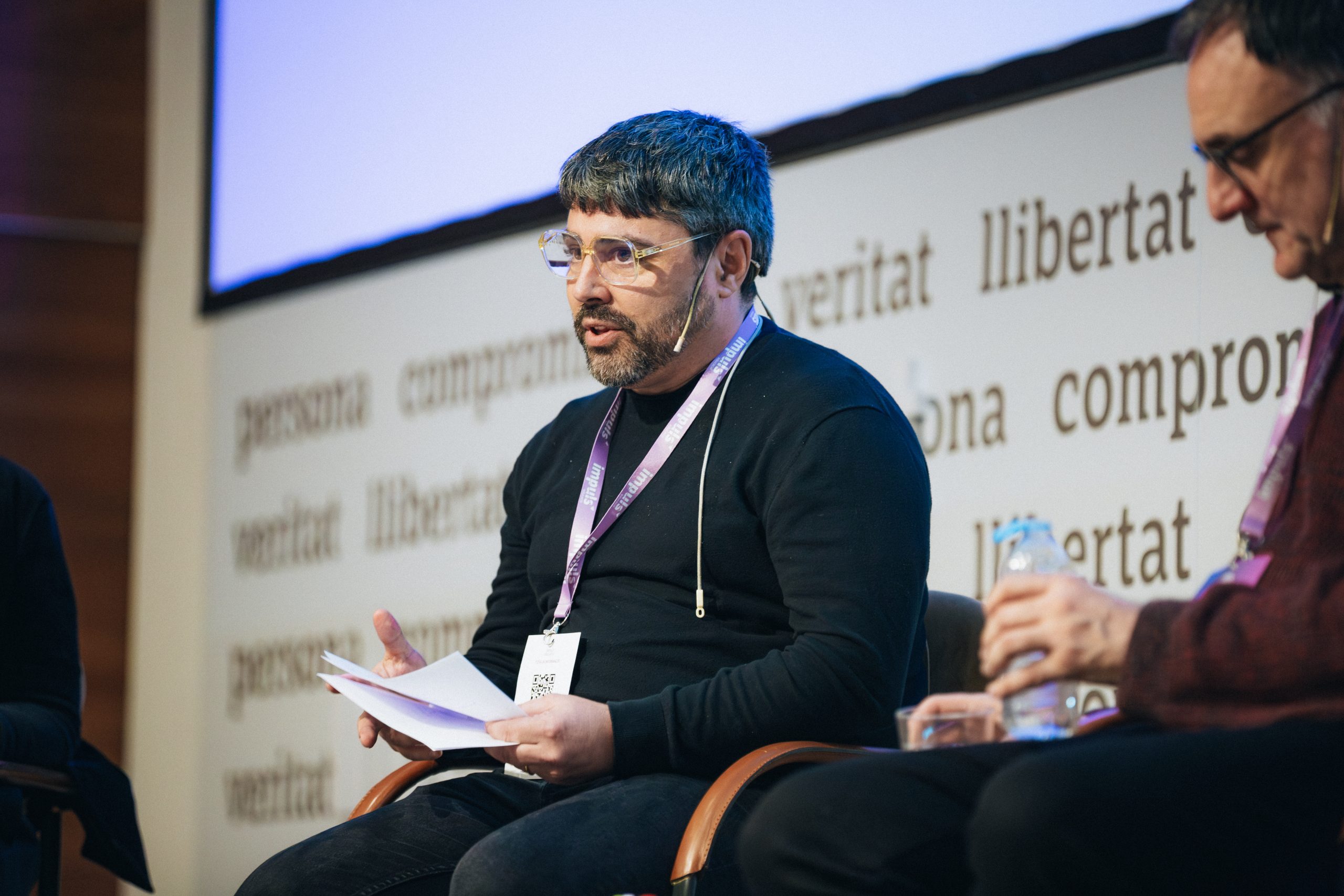
Institutional resilience hinges on three core axes: legacy, shared meaning, and strategic direction. By dismantling traditional front-facing rows and raised lecterns, there is no turning back.
Vision, Empirical Evidence, and Deprivatized Practice
Núria Cagigós showcased her institution’s educational blueprint as a prime example of visionary stewardship designed to embed sustainable pedagogical transformation deeply within the school culture. This systemic evolution is accelerated via three distinct levers: a robust network of distributed stakeholders to insulate the project from dependency on a single figure; high-impact, continuous professional learning that transcends abstract theory; and the systematic deprivatization of classroom practice to ensure pedagogy goes beyond mere rhetorical discourse.
Sustainable leadership, she posited, must define educational improvement by its tangible impact on deep, enduring student learning, demonstrating the capacity to inspire the community and outlast executive tenures. This iterative cycle requires rigorously identifying authentic institutional needs, selecting instructional interventions backed strictly by empirical research, deploying them with high intentionality, and accurately measuring impact to manage feedback loops and drive continuous improvement.
Operational execution depends on continuous, job-embedded professional learning directly tied to real-time classroom conditions, robust teacher accompaniment via structured observation and feedback loops, and leveraging pedagogical leads who actively model these instructional standards for the rest of the faculty.
Furthermore, the school strictly operationalizes core principles from cognitive science, operating under the maxim that students retain what they cognitively process with desirable difficulty. Along these lines, the faculty incorporates high-impact, evidence-based instructional techniques—modeled on Doug Lemov’s frameworks—such as expanding wait times following queries to catalyze deeper conceptual processing, and deploying specific routines to make student thinking visible. These practices guarantee rigorous, ongoing formative assessment and secure equitable participation across the entire student body.
Sustainable leadership demands a distributed network, job-embedded professional learning, and highly visible, deprivatized practice. Ultimately, students learn what they process with effort.
Structural Conditions: The Administrative Mandate
The panel’s concluding inquiry regarding the systemic conditions necessary to safeguard and elevate front-line instructional practice—the ultimate crucible of school transformation—elicited four highly complementary directives from the leaders.
Jordi Musons isolated three critical structural imperatives: significantly enhanced staffing ratios to actualize genuine classroom inclusion, a unified and cohesive systemic vision across the region, and heightened institutional autonomy spanning both talent acquisition and fiscal management.
Xavi Ros framed his imperative around a fundamental redefinition of the relationship between central government and local school sites. The public administration must focus exclusively on facilitating the structural conditions that empower local institutions, steadfastly refraining from top-down, compliance-driven mandates which empirical evidence consistently reveals to be counterproductive. As Andy Hargreaves has exhaustively documented, authentic transformation can only be driven by internal conviction, never by external decree.
Xavier Solé appealed to an intangible yet entirely decisive systemic asset: protected time and organizational calm to dedicate exclusively to pedagogy, which requires an immediate, aggressive mitigation of non-essential bureaucratic overhead. To this, he appended a demand for courageous political leadership capable of looking past electoral cycles to secure a comprehensive, long-term, non-partisan educational pact backed by robust, sustained public appropriations—particularly earmarked for inclusive education.
Núria Cagigós concluded the address by shifting the analytical focus from resource allocation to existential meaning. While fiscal and material resources are vital, she argued that the ultimate engine of long-term commitment and professional excellence lies in systematically igniting the faculty’s internal sense of mission and institutional belonging. Remaining acutely aware of our profound, lasting impact on human lives is the true internal catalyst of sustainable professionalism.

Systems require robust resources and heightened institutional autonomy. Yet, the ultimate transformation lies in igniting the faculty’s deep sense of mission and institutional belonging.
Rate the post
You might be interested