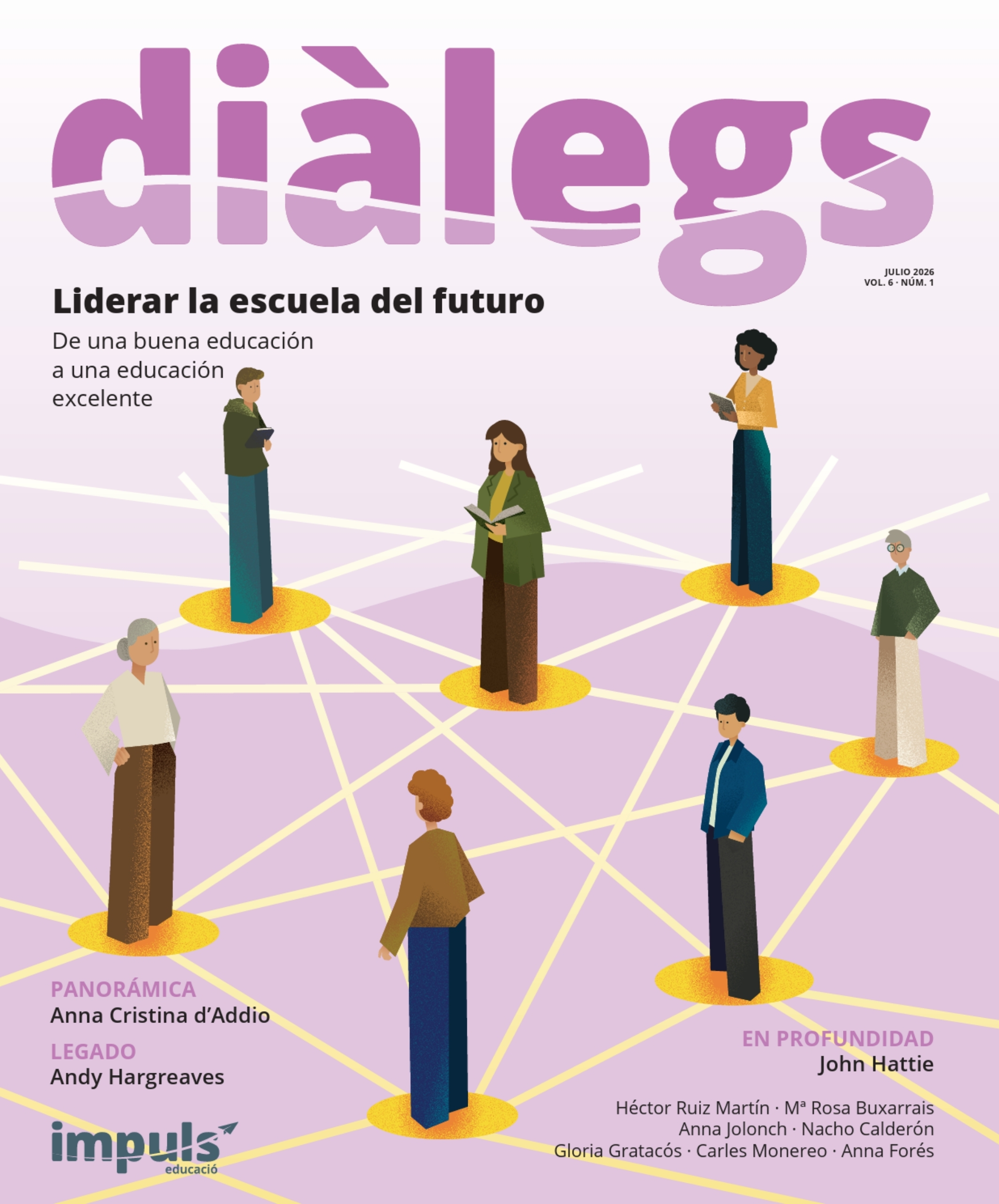
by Impuls Educació
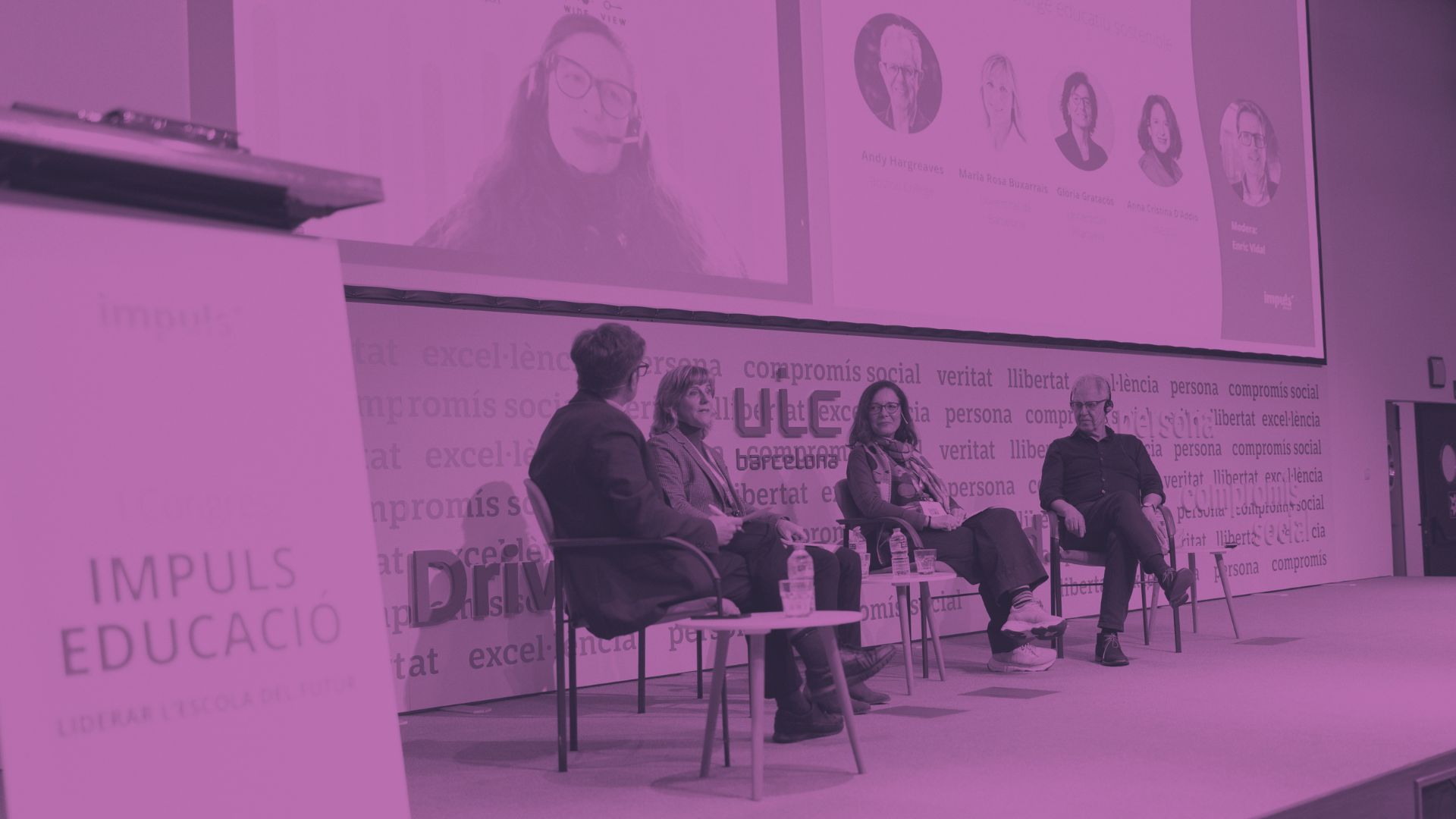
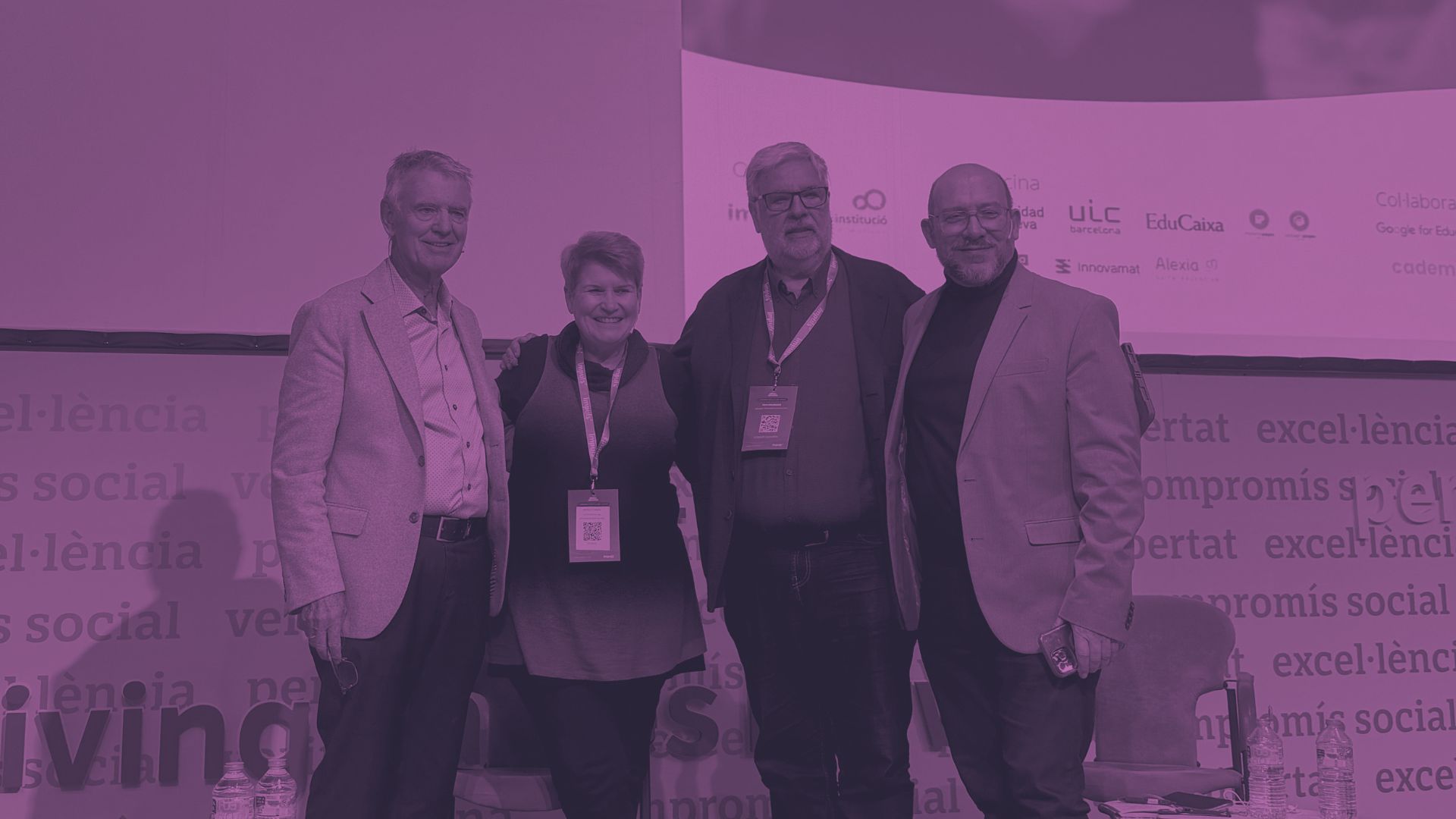
Four preeminent voices convened to untangle the complexities of cultivating genuinely sustainable educational leadership during the Congress’s second international panel, moderated by Enric Vidal. The panel brought together Andy Hargreaves, who co-conceptualized the framework of professional capital alongside Michael Fullan; Maria Rosa Buxarrais, an expert in ethics and educational leadership at the University of Barcelona; Anna Cristina d’Addio, a pivotal figure behind UNESCO’s GEM (Global Education Monitoring) Report; and Glòria Gratacós, a specialist in leadership and teacher development. The overarching diagnosis was unanimous: leadership is, first and foremost, about engineering the systemic conditions that allow an educational project to endure long after the leader’s tenure. Sustaining this ecosystem hinges on robust professional capital—comprising human, social, and decisional dimensions—a shared moral contract, and a profound sense of community belonging.
The Essence of Human Leadership in Educational Institutions
Maria Rosa Buxarrais initiated the dialogue by anchoring leadership within the paradigm of capacity-building and environmental design. Leading individuals, she argued, requires expanding opportunities and establishing the vital structures that empower all community stakeholders to co-construct the overarching educational vision. Steering a team toward a shared objective demands an unyielding foundation of core ethical values—namely equity, care, and systemic commitment. A non-negotiable prerequisite for this is moral legitimacy: the entire faculty must clearly understand and align with the leader’s value system to preempt friction and cultivate institutional trust.
Glòria Gratacós expanded on this framework from an operational standpoint, positing that leading is fundamentally rooted in an unwavering belief in human potential. Within the landscape of teacher leadership—specifically referring to classroom practitioners operating without formal administrative titles—trust serves as the cornerstone. While contemporary educational policies frequently enforce teacher participation through top-down, bureaucratic directives, schools must pivot toward strategies centered on cultivating supportive conditions. Ultimately, it is front-line educators who best comprehend the immediate needs of students and their families. Gratacós introduced a critical nuance regarding vocational dedication: empirical research underscores that teachers driven by high altruistic motivation—those intent on advancing social mobility and equity—routinely exit the profession if they lack institutional support from school leadership and a collaborative school culture.
Anna Cristina d’Addio reframed the challenge through a systemic lens, characterizing human leadership as a collective enterprise aimed at a singular goal: elevating educational quality. According to the UNESCO GEM Report, highly effective leadership rests upon four pillars: articulating clear, shared expectations; maintaining a relentless focus on learning; fostering deep collaboration through distributed leadership models; and championing the continuous professional learning of staff. Because an outstanding educator does not automatically translate into an effective leader, professionalizing school leadership through specialized, targeted training is imperative.
Andy Hargreaves concluded the opening segment by contextualizing these imperatives within today’s hyper-complex educational climates. Leadership, he noted, must be exercised in a way that allows individuals to find moments of genuine joy in their daily stewardship, particularly by witnessing the positive growth they cultivate in others. While systemic friction and operational challenges are inherent to the role, school leadership must transcend being a mere source of chronic stress; it must empower leaders to approach each day with a resilience and positivity that actively inspires the wider educational community.
Leading means engineering the conditions that allow everyone to co-own the project; without moral legitimacy, institutional trust cannot exist.

Vocation, Career Stages, and the Shared Moral Contract
When prompted by the moderator to address how leadership models should adapt to the shifting lifecycles and professional stages of faculty, the panelists converged on a central truth: the defining variable is not chronological age, but vocational alignment and institutional culture.
Maria Rosa Buxarrais noted that empirical research debunks the idea that professional attitude correlates strictly with age. Many novice teachers enter the field bursting with innovative pedagogy only to become quickly demoralized if the institution erects bureaucratic roadblocks, whereas veteran educators frequently sustain a profound, lifelong vocational dedication. The key, therefore, resides in vocation and the ethical fabric of the school. The moral contract forged upon entering an educational team carries deep ethical weight, fundamentally reflecting each professional’s intrinsic definition of what it truly means to educate.
Gloria Gratacós added a systemic dimension to this argument, stating that for teacher leadership to remain viable, it must be systemically recognized, structurally supported, and culturally valued. Schools host highly experienced educators who have thoroughly internalized the institutional heritage; the mandate of modern leadership is to establish mechanisms that allow these veteran role models to seamlessly share their expertise and shepherd incoming generations into the educational project. This represents a model of mission-driven leadership that aligns institutional milestones with faculty aspirations, leveraging the rich cognitive diversity of the entire team.
Professional Capital: The Triad of Consistent Stewardship
The discussion on institutional capacity allowed Andy Hargreaves to elaborate on “professional capital,” one of the most influential frameworks in contemporary educational research, co-developed with Michael Fullan. The paradigm emerged as a direct counterweight to short-sighted educational policies that sought to replace human teachers with automated technology or leverage high turnover rates by continuously hiring young, inexpensive, and inexperienced staff.
In contrast to this transactional logic, professional capital asserts that instructional mastery and leadership acumen are forged incrementally over time, through deep professional relationships, and accumulated clinical judgment. It stands on three non-negotiable pillars:
1. Human Capital: For leaders, this manifests as dispositional authenticity—possessing a well-defined ethical compass, exercising professional courage, and refusing to camouflage one’s identity. Suppressing who one genuinely is, Hargreaves warned, inflicts profound psychological harm on both the individual and the broader institutional climate.
2. Decisional Capital: The systematically structured capacity to cultivate deep expertise, nuance, and sophisticated clinical judgment over an extended career. This is precisely the dimension that rapid teacher attrition and precarious, short-term contracting completely dismantle.
3. Social Capital: The structural acknowledgment that educational ecosystems flourish far better through collective efficacy than isolated effort. Hargreaves clarified, however, that collaboration must remain purposeful and balanced, ensuring it never paralyzes the decisive executive actions that the profession demands.

Professional capital anchors itself across three pillars: human, decisional, and social; rapid staff attrition completely dismantles this foundation.
Cultivating Resilience Amidst Volatile Climates
Addressing the blueprint for building resilient leadership in today’s volatile landscape, Anna Cristina d’Addio centered her framework on four structural imperatives. Navigating contemporary systemic complexity requires, first and foremost, robust specialized training and institutional support systems. School leaders require structured mentoring and rigorous preparation to master a role that now extends far beyond oversight of academic benchmarks; it fundamentally encompasses engineering safe, physically and emotionally supportive environments for the entire student body.
To this, d’Addio appended two critical systemic needs: aggressively addressing the lack of demographic diversity within school leadership to ensure that administration accurately mirrors the multicultural realities of modern classrooms, and systematically investigating how leaders construct and sustain a positive, enduring institutional legacy—an area where educational research still requires profound development.
The Non-Negotiable Baselines of an Effective School
When asked to define the core guarantees that every school must secure, the panelists offered a series of complementary, high-impact standards.
Maria Rosa Buxarrais synthesized three essential criteria: a school must maintain deep alignment with family values, secure a stable and committed faculty, and operate under a unified, rigorous educational project.
Glòria Gratacós focused on institutional integrity, demanding absolute coherence between an organization’s stated philosophy and its operational actions. Schools must harbor an unyielding belief in the potential of their students, faculty, and families, actively integrating them to address the authentic learning needs of the student body.
Andy Hargreaves proposed three concrete operational metrics: ensuring that students acquire novel, actionable knowledge every single day; deliberately fostering deep social belonging and peer friendships, particularly across diverse demographics; and guaranteeing an unconditionally safe environment backed by clear, proactive, and positive anti-bullying frameworks.
Anna Cristina d’Addio delivered a highly pragmatic criterion that serves as an excellent benchmark for policy design: every child must return home each afternoon carrying a profound sense of institutional belonging and possessing actionable knowledge tailored for daily life.
The ultimate metric of a great school: every student returns home anchored by a sense of belonging and equipped with actionable knowledge for life.

Middle Leadership and Sustainable Educator Engagement
The panel’s concluding inquiry targeted the core of institutional sustainability: how middle leadership can drive enduring commitment, and what structural conditions are necessary to sustain faculty engagement.
Anna Cristina d’Addio emphasized that cultivating capacity is never the exclusive domain of the executive cabinet; it belongs to every single professional within the building. Executive leaders must intentionally empower and extend trust to middle management and staff, enabling every professional to proactively confront systemic challenges from their distinct operational spheres.
Glòria Gratacós synthesized the entire discourse with a powerful mandate: to sustain high-level teacher engagement, institutions must provide professional learning and support systems directly tied to the authentic, real-time needs of the school. Furthermore, leadership must transparently articulate to all stakeholders how their individual contributions drive the collective mission. When educators, students, and families are genuinely valued and assume collective accountability, an authentic culture of institutional belonging is born, cementing an enduring, sustainable commitment to the educational vision.

When every stakeholder is valued and shares in collective accountability, true institutional belonging is forged.
Rate the post
You might be interested